Havering Councillor: Bob Perry (Emerson Park)

Bob Perry and the Conservative leadership are at odds.1 Bob is threatening to leave the Conservatives if they don’t buck up their ideas. He’s failed to notice that the Conservatives aren’t the party he joined in the 1970s. The current leadership battle should have told him that the Conservatives he knew and loved have parted company.

If we look at them in terms of bookies favourites they are far away from Margaret Thatcher.

Boris Johnson: serial adulterer, ego-driven Mayor of London and buffoon

Michael Gove: self-confessed cocaine user who’d be a criminal if he lived in Havering

Dominic Raab: the Brexit secretary who signed ‘The Deal’ and then voted against it in Parliament.

Sajid Javid: as Home Secretary introduced immigration laws which would have meant his father would have been deported.

Jeremy Hunt: forgot that he’d bought flats in Southampton worth millions.

I’m sorry Bob but none of the above care about suburban Conservatives like you. They live on a different planet. They’ve all taken drugs and they’re all multi-millionaires. You can’t leave them, they’ve already gone. Margaret Thatcher’s Conservative party has sold its soul to chancers, criminals, opportunists and spivs.

1 Romford Recorder 7th June 2019 p14

Havering and Evidence Based Decision-making

After reading many committee reports, what is shockingly obvious is the lack of evidence based decision-making. Many decisions are entirely political or worse, fly in the face of evidence.

The recent decision about car-parking is entirely flawed. Prior to this decision, car-parking charges were sensitive to the needs of shop-keepers. 30 minutes of free parking promoted a steady flow of casual car based customers which is characteristic of Havering’s elderly shoppers. That policy was abandoned. The new decision wasn’t based on evidence from an impact study of shoppers or shop-keepers. Given the challenging retail environment, this is irresponsible at best.

Not a single decision has been reversed due to subsequent evidence. Car-parking charges demand further analysis as their effect could be cataclysmic. Maybe the anticipated increase in revenues won’t happen. What will the cabinet do then? Increase charges again or reverse the decision? The latter is profoundly unlikely whereas the former is probable.

Likewise additional investment in the police is problematic. The justifications are vacuous remarks about making Havering ‘safe’. Is approximately 1100 days of policing per year for £300,000 value for money? Five police officers spread round 18 wards?

Committee members have an opportunity to ask for Topic1 working parties to review important issues. These opportunities are rarely used. Both of the above examples have long-term implications for Havering and should be constantly reviewed.

1 Interestingly members of public can raise Topics for possible committee discussion. There is a direct link in the committee papers inviting citizens to outline why a specific item should be discussed.

Havering and the European Elections 23rd May 2019

Havering’s ultra Brexit MPs, Julia Lopez and Andrew Rosindell, didn’t swing the vote the Conservatives’ way in the European elections. The electorate ignored their valiant efforts in parliament. Nigel Farage’s ego-driven Brexit Party trounced the Conservatives, who came fourth behind the LibDems and Labour.1 This bodes ill for Romford Conservatives. They were engulfed from the right, by the Brexit party, and the left, by Labour/LibDems/Greens.

Both Julia and Andrew had huge majorities in the 2017 general election but the electorate is fickle.2

Conservatives are seen as hopelessly divided and incompetent, in part, because of the constant opposition to Theresa May’s deal. Havering, which is solidly Conservative, now has a ruling party which is fourth in a national election.

Taking the European and Cranham elections3 together, they point towards old political truths in a new guise. Democracy is about which voters turn up. The current iron grip on Havering’s two parliamentary seats could change, notwithstanding the enormous majorities.4

1 https://www.havering.gov.uk/news/article/583/2019_european_parliamentary_election_results

UKIP did better in the 2014 election than the Brexit party in 2019. They got 34560 votes in 2014 in comparison to Brexit’s 32,165.

2 The 2017 general election result from Canterbury is etched into their psyche. The Conservatives increased their vote by 1.8% but Labour’s vote shot up by 20.5%. Result: a narrow Labour win.

3https://www.havering.gov.uk/news/article/569/cranham_by-election_results

4http://democracy.havering.gov.uk/mgElectionResults.aspx?ID=3&RPID=0

UKIP got 20% of the vote in comparison to the Conservatives 28% but only won 7 seats.

A Bizarre, Wonderful democracy: London Borough of Havering, 2018

The May, 2018 election was keenly fought in the London Borough of Havering. Havering is a thriving democracy with nine parties elected to the council chamber. There were 2011 candidates for 54 elected positions. The people of Havering favour the Conservatives in national elections. The two Conservative MPs have around 60% of the vote.2 The borough can be divided electorally between Hornchurch and Upminster in the east and Romford in the west. That is also the local political divide. The Conservatives dominate Romford and are a negligible force in Hornchurch and Upminster. Why?

The dynamic Residents’ Associations destroyed the Conservatives in Hornchurch and, especially, Upminster, in the 1980s. They promoted localism and regarded national party affiliations as intensely suspect. Residents’ Associations grip virtually all the east and south of Havering. There’s only one ward, in the east, which is reliably Conservative. The political brand Resident Association is now so powerful that all of Havering’s political parties wish to be connected to it, no matter how tenuously.

Meanwhile the Romford Conservatives hold sway. Twenty-one of the Conservatives twenty-five seats are in the Romford part of Havering. Here the political dynamics are driven by the local MP. Prior to being elected an MP in 2001, he was dedicated to electioneering and constituency work. Conservative councillors in Romford have to be activists or they’re pruned. The MP is a model for Conservative activists and councillors. The explosion of political activism brought by the UKIP party has now subsided and the Conservatives of Romford had a clean-sweep in 2018.

Historically the Conservatives hoped that Residents’ Associations would peter out and the Hornchurch and Upminster wards would revert to their ‘natural’ home: the Conservatives. This hasn’t happened. Unlike UKIP who flared brightly before becoming irrelevant, the Residents’ Associations have gone from strength to strength. Their impact on both Conservative and Labour voters as can be seen in the south of the borough, which is now a Residents’ stronghold (see note 2). Binary politics has ended in Havering. It appears that Havering will never have a majority council elected again.

There are six Residents’ Associations parties represented on Havering’s council (see Addendum) but they aren’t unified. They don’t have a leader or a shared political stance on anything. As a result they merely represent their own wards: local politics at its worse so far as decision-making is concerned. The South Hornchurch Residents couldn’t even get on with each other. (One of them left the Residents’ Association, stood as an Independent, won and promptly joined the Conservatives.) Romford Conservatives could pick and choose who they wanted in their coalition immediately after the election. Adroit political footwork roped in three Residents’ Association councillors3 who pledged support without actually joining the Conservatives. Having boosted their number by four the Conservatives resumed control of the Administration.

The 2018 local elections in Havering were unique in the GLA area. Only Havering council has no overall control. Binary politics is so weak in Havering that it’s entirely likely that there will never be a majority council again. Havering always has a very large number of candidates and nine parties are represented on the council. If Romford Conservatives were to lose their iron grip it’s extremely difficult to see how there could be stable local government in Havering given the anarchic nature of the various Residents’ Associations.

Addendum: The outcome of the local elections in Havering, 2018

The Conservative Party: 25 seats
Hornchurch Residents’ Association: 8
Upminster and Cranham Residents’ Association: 6
Labour Party: 5
Rainham and Wennington Independent Residents’ Group: 3
Harold Wood Hill Park Residents’ Association: 3
South Hornchurch Independent Residents’ Group: 2
Independent: 1
The Harold Hill Independent Party: 1 (this is a Resident focused person)

1 There were 201 candidates offering themselves for election. This is an 8% drop on the 2014 figure of 218. There was a 2.7:1 differential in gender with 147 male candidates and 54 women. The success rate was slightly in favour of men. A male candidate had a 28.6% chance of victory whereas for women it was 22.2%. Therefore men were more likely to be elected but the disparity isn’t a glaring example of discrimination. Turn-out ranged from 26.6% to 45.47% in comparison to the 70% for the General Election.

2 Dagenham and Rainham parliamentary constituency is split with three wards located in Havering for local elections. These wards are in the south of the borough and ‘ought’ to vote Labour along with the remainder of the parliamentary constituency: there are no Labour councillors from these wards.

3 South Hornchurch Independents and the Harold Wood Hill Park Residents’ Association respectively.


Chris

Damian White and Viddy Persaud’s ‘Rent-A-Cop’ scheme

Let’s imagine1 Damian and Viddy are hard-nosed ruthless negotiators who know the Metropolitan Police are cash-strapped after Conservative Austerity cuts. An offer is made which is turned down. Damian and Viddy say, “Yes, we want more Metropolitan police in Havering but on our terms.” Our terms are: five police officers for three years. A total of 5475 days. And we’ll pay £900,000.2

Let’s imagine Damian and Viddy aren’t hard-nosed ruthless negotiators and capitulate to smooth talking police salesmen.3 What do the Metropolitan police offer? A maximum of 3285 days, because – there’s an annual minimum of 10 days per officer (150 over three years) of, High Demand Days4. Police sick leave averages 5-7 days annually plus 25 days holiday, plus an unknown number of court appearances, training days, compassionate leave and they work a five day week. £900,000 is the teaser rate to get Damian and Viddy hooked not the final bill. (addendum one)

The police sales team made an offer Damian and Viddy couldn’t refuse:

If the Met PartnershipPlus was not supported the ability to secure additional Police resource for activity locally would be subject to East BCU priorities.5

Or: Pay up or we’ll do what we did with police stations. This really is hard-nosed negotiating.

This cabinet decision will be reviewed by the Crime and Disorder Committee. They won’t want to look ‘soft’ on crime, so Commissioner Dick will get her deficit reduced. Well done Damian and Viddy the citizens of Havering are paying twice for the same service. (addendum two)

Addendum one: The £900,000 opening gambit

Provision for police overtime can be made within the agreement; this will be required particularly where there is an expectation for the officers to work on bank holidays. Additional resources to support the officers, such as vehicles, may be funded by the London Borough. These arrangements may either be included as part of the scheme Agreement or formalised within a separate agreement, subject to consideration of the requirement, funding available and the term of the funding.6 (my emphasis)

Addendum two: Havering’s police precept

To keep Londoners safe, the Mayor has decided to raise the police element of his council tax precept by £12 for a typical Band D property. This will help to keep officer numbers as high as possible within the resources the Mayor has at his disposal.7

Basically their figures were wrong in the first place as government cuts were bigger than expected.

1 “It isn’t hard to do.” John Lennon Imagine

2 Damian also agreed £250,000 on up-grading the CCTV system. The Home Office have cast doubts on CCTV’s effectiveness.

3 Officers purchased under the PartnershipPlus Scheme will be additional to the BCU Establishment. (my emphasis)

http://democracy.havering.gov.uk/documents/g6171/Public%20reports%20pack%2008th-May-2019%2019.30%20Cabinet.pdf?T=10 p359

4 loc.cit

5 ibid p360

6 ibid p361

7 https://www.havering.gov.uk/download/downloads/id/1856/gla_budget_full_version_2018-19pdf.pdf
Cranham By-election 9th May 2019

Cranham is an ultra safe Residents Association (RA) seat and following the tragic death of Clarence Barrett a by-election was called. Former councillor Linda van den Hende was the RA candidate and she triumphed. With 2421 votes she was 2109 votes more than the second placed Green candidate. Turn-out was a respectable 35.7%.

This appears entirely uninteresting. However if the Cranham RAs were a vibrant campaigning group there’d be no problem getting a candidate. Indeed eager candidates from the RA membership should have been looking forward to representing Cranham. This wasn’t the case. Linda retired from the council in 2018 after 12 years. She’d rounded off her ‘final’ year by being mayor and so that was that. So what could have happened to Cranham RAs that brought Linda out of retirement?

The RAs have become a clique. The RAs in Cranham, Upminster, Harold Wood, and Rainham are the Establishment. Three Harold Wood councillors decided to vote with the Conservatives. Why? Michael Deon Burton committed political suicide by becoming Conservative immediately after the 2018 election. All four are elderly and have no idea why they’re RAs apart from the joy of being a councillor.

The problem with cliques is that without new blood they wither and die. Linda’s triumph should be a warning to the RAs. Nothing is for ever in politics. Don’t forget the remote second place candidate was a member of the Green Party.

The sale of ‘Hall Lane Pitch and Putt’: Conservative Revenge?

Declaring the ‘Hall Lane Pitch and Putt’ redundant is political revenge by Romford Conservatives. For them everything is political and they hate the Upminster Residents Association (RA) for consistently denying them a majority in Council. Conservatives are in endless minority administrations because of RAs. When challenged, they piously pointed at Havering’s housing plan,1 as a justification for the sale.

RA councillors made fifteen objections to the sale. These reflect the concerns of their constituents.2 House prices weren’t included amongst those objections. However house prices are the life and soul of people living in Upminster. They pretend ‘Pitch and Putt’ is important but no-one’s fooled.3

People who’ve spent a million plus on their homes don’t care about London’s housing crisis. They comfort themselves with the thought that the crisis is an inner-city problem. It isn’t. Many ‘children’ in Havering earn substantial salaries but can’t live near their families. Thirty year old ‘children’ living in the family home is well known.

The re-designation of Hall Lane Pitch and Putt site reflects political muscle. Romford Conservatives actively dislike Upminster RAs. By re-designating this iconic site as development land and forcing it through the democratic process, they’ve illustrated their control of Havering. Inadvertently though, the decision also goes some way towards meeting Havering’s housing needs.

1 The council’s position is here:-

https://havering-consult.objective.co.uk/portal/pp/lp/lp?pointId=4645265#document-4645265

2 http://democracy.havering.gov.uk/documents/g6182/Public%20reports%20pack%2002nd-Apr-2019%2019.30%20Overview%20Scrutiny%20Board.pdf?T=10 see especially pp232-3

3 Hall Lane, The Fairway and Holden Way all have houses in 2018-9 that have been sold at £1 million plus.

Living in Havering: Councillor Damian White’s Personality Cult?

Living in Havering magazine is remarkable.1 Damian is featured in an astonishing seven photographs on page three. Iffy leaders of third world countries routinely do this to establish their personality cults but that can’t be the case in Havering. Or can it? Is this publicity onslaught right and proper in a taxpayer funded Council magazine? Colchester’s Centurion magazine on the other hand sets a benchmark to which Living in Havering should aspire. There are no photographs of their Leader or any cabinet member.2

In Damian’s Living in Havering magazine, we read that council spending on roads and pavements will be £40 million over four years.3 Twenty-two projects are specified. Damian’s ward, Squirrels Heath, garnered 27% of the projects, about £11 million if everything is pro rata. The allocation could have been a surprise for Damian. Maybe it was a fluke. A fluke like the one where all the road repair money is to be spent in Romford constituency.

That Living in Havering is a taxpayer funded Conservative magazine seems fairly clear cut. This is a surprise as Damian leads a minority administration.

1 April 2019 edition. The front cover of Living in Havering has Osman Dervish and Robert Benham alongside Damian. https://www.havering.gov.uk/info/20050/council_publications/155/living_in_havering_magazine

Two other council magazines are included in this site and neither are devoted to the stellar qualities of their Leader or cabinet members

2 https://cbccrmdata.blob.core.windows.net/noteattachment/Centurion%20March%202019.pdf

3 Living in Havering April 2019 edition p15

Brexit means Brexit: Conservatives Triumph Again!

Damian and Roger will be canvassing in the next six weeks. Don’t worry. They’re harmless. You’ll know them by their blue rosettes with ‘Vote Europe’ across the middle. They’re canvassing for Conservative MEP candidates for the Euro elections.

Smiling and saying, ‘Good morning’ is fatal. They’re programmed like a washing machine. Once they start they’re very hard to stop. Roger will tell you the only way to Brexit is voting Conservative. Don’t mention 29th March, 12th April, 23rd May, 30th June or Halloween Night. It agitates him.

Damian will tell you Brexit will stop us being slaves and the NHS will get £350m a week as a bonus. He’s working hard at understanding this, so cut him some slack.

Damian believes seamless international trade is worse than customs checks and tariffs. Don’t argue. Shout through to the empty room behind you, ‘Is dinner ready yet?’ It always worked with Jehovah Witnesses in the old days, so why not now?

Meanwhile the Conservative Party is gearing up to greet Prime Minister Theresa May at their Party Conference in Manchester on 29th September. She’ll revive her catch phrase, ‘Brexit means Brexit’ getting rapturous applause from Damian and Roger.

Late News: David Cameron’s autobiography Theresa May: my part in her downfall will be on sale at Conference from 29th September and at all good charity shops from 5th October.

Winston Churchill’s Wartime Politics: Lessons to be Learned

Churchill detested the Labour Party and their trade union allies but knew Britain needed a government of national unity in 1940. The Labour leader Clement Attlee became his deputy. Attlee brought trade union leaders with him as part of the bargain. Churchill directed the war effort and Attlee the Home Front. This continued until May 1945.

Churchill made many unpalatable decisions during the war. Entering coalition was one of them. He worked with Attlee for five years. An indication of just how hateful he found this came immediately after the war. His infamous ‘Gestapo’ speech showed him at his rhetorical worst.1 Campaigning in the post-war election, Churchill said voting for Labour was a vote for Gestapo style politics. Churchill said this about the men he’d successfully worked with throughout the war years.

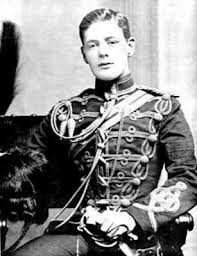
churchill-at-omdurman

Churchill aged 23 prior to the battle of Omdurman, 1898

Churchill was a Victorian imperialist. In 1898 he took part in a cavalry charge at Omdurman, in the Sudan. He had Eisenhower imposed on him as Commander in Chief in December 1943. British Armed Forces in Europe were henceforward under American command. All principal military decisions were made by Eisenhower and Roosevelt. Strategy was discussed with Churchill but the ultimate decision was theirs. It was Eisenhower who had the final say over the D Day invasion of France for example. Britain lost military independence permanently from 1943 because Churchill accepted Eisenhower as C-in-C. ‘A price worth paying’, he rightly believed.

The lessons for Julia Lopez and Andrew Rosindell are obvious. Churchill did things he detested in the national interest. Why can’ t they?

1 https://oedeboyz.com/2015/07/10/winston-churchills-gestapo-speech-4th-june-1945-2/