Havering and the GLA Election, 2021

Damian White wept when he saw the results. Havering produced rock solid Conservative majorities whilst he struggles with a minority administration. A short political history lesson will explain why he’s suffering.

Fifty years ago, Jack Moultrie was the Conservative Leader of Havering Council who was dismissive of an Upminster housewife. Tragic error! That woman was the late, great Louise Sinclair. She despised the Romford-centric policies Jack embraced. He offered scraps from the table. She wanted more, much more.

Her formidable talents as an organiser and networker turbocharged the Residents’ Association (RA) movement. They fought and won elections in Upminster and Cranham. When Roger Ramsey was Leader in the 1980s, Upminster was nearly a Conservative no-go area. By 1990 it was. That feud shaped Havering’s politics so there would more-or-less be minority administrations. The RAs moved out of their heartlands taking over most of Hornchurch and south Havering.

To keep power, Damian has to do deals with RAs in one way or another.

Meanwhile the GLA election. ‘Tribal’ Conservative voters ignored the Gallows Corner disaster. Notwithstanding pre-election promises, I’m not holding my breath on that one. Shaun Bailey trounced Sadik Khan 51%-29%. His FaceBook campaign suggested there was lawlessness raging from Cranham to Heathrow. His grip on local government finance is strictly Ladybird and doesn’t inspire confidence. Another reason for Damian to weep.

Louise Sinclair changed Havering’s politics in the 1980s. She knew Jack Moultrie’s plan to turn Romford into central London was ridiculous. Louise knew what local politics means, good housekeeping and aspirations. We’ve got the housekeeping. Where, oh where, is the aspiration?

Damian White’s Political Arithmetic

Damian is a politician, which is a precarious job. In 2018, he finessed a brilliant coup.1 Building on his Romford heartlands he’s maintained a minority administration ever since. Now it’s unravelling.

Michael Deon Burton (South Hornchurch) 48 hours after being elected a Residents’ Association (RA) councillor he joined Damian’s Conservatives, seizing his baubles. His chances in 2022 are nil.

Sally Miller (Elm Park) An RA convert to Damian’s Conservatism. Her Elm Park seat will be RA again after she abandons it.

John Mylod (St Andrew’s) Left his RA group immediately before the 2018 election after a row. He retained it on a personal vote. This seat will probably revert to the RAs.

The Harold Wood Three They discovered the joys of Damian’s baubles but stayed in the RAs. I think they’ll lose in 2022. It’s problematic who’ll win with multiple candidates.

Damian’s arithmetic = minus six?

Damian might win six seats. Rainham is unlikely but South Hornchurch is a lottery with poor RA councillors leaving a poisoned legacy. Beam Park is an unknown and it’s only two seats. New wards in Romford are competitive and Damian can’t take them for granted. He might lose. RA heartlands are as safe as Romford and so the bizarre world of Havering politics jogs on.2

The Conservatives need a terrific 2022 Election. If the RAs unite, Damian is looking at an enormous pay-cut.

Notes

1 Havering Council: Damian White gets power, May 2018 – Politics in Havering

2 The Bizarre World of Hornchurch and Upminster Politics – Politics in Havering

Havering’s Individuals Overview and Scrutiny Sub-Committee – 13th April, 2021

This meeting1 discussed findings from Healthwatch Havering. Their report was released as part of a NHS survey: Experiences of disabled North East London residents in the Covid-19 pandemic.2

The questionnaire was too long. For example Q2 was sub-divided into six parts whilst Q12 was sub-divided into eleven parts. The document was formidably long at 26 pages. The additional questionnaire for carers was 25 pages long. Ian Buckmaster faced an impossible task summarising the findings accurately. (4-32 mins)

GP services were challenging for disabled residents (13-16). Harrowing anecdotes were told of lengthy delays hanging on the phone. GP websites were problematic and Ian Buckmaster said they could be in breach of NHS contracts.

The chair Christine Smith guided the meeting successfully. The only bleak spot was David Durant (see especially 47-9) who holds his prejudices uncritically. Trivialities like plausible information doesn’t deflect him. The chair used personal knowledge to rebut him. It didn’t make any difference. Too many councillors were silent apart from Jan Sargent and John Tyler.

The report was noted. Recommendations to the cabinet member Jason Frost should have been made. GP services impacts everybody as John Tyler hinted. Havering Council could, perhaps, broker a deal with the NHS and GP services in this critical area.

Notes

1 Annotator Player (sonicfoundry.com) All timings refer to this webinar

2 (Public Pack)Agenda Document for Individuals Overview & Scrutiny Sub-Committee, 13/04/2021 19:00 (havering.gov.uk)

Gaynes School, the Pupil Premium and Accountability

It is for schools to decide how the Pupil Premium, allocated to schools per FSM* student, is spent… for the individual pupils within their responsibility.” Government statement (my emphasis)

The challenge to establish a clear link between educational expenditure and pupils’ learning is harder than one would imagine. It may seem obvious that more money offers the possibilities for a better or higher quality educational experience, but the evidence suggests that it is not simply a question of spending more to get better results.”* Gaynes statement (my emphasis)

Gaynes School received £69,190 of Pupil Premium (PP) funding in 2020-21. PP funding demands acceptance of the government’s criteria of accountability. The government’s criteria are clear, unequivocal and entirely reasonable (Addendum one). Gaynes fails to be clear or precise in this important duty.

Gaynes response to disadvantaged children is providing,

Additional Educational Resources for Looked After Children – allocated £1,800

Strategy: For 2019-20, each looked after child has a Personalised Educational Plan drawn up by our specialist worker in conjunction with the local authority to ensure that each student receives resources and support which would be appropriate for them as an individual.”

£1,800 is about £29 per disadvantaged child (2.6% of PP funding). The other £67,390 is invisible. (Addendum two) Gaynes says money doesn’t guarantee ‘better results’. Nonetheless PP funding should be analysed for effectiveness. PP funding is targeted and schools, are best placed to assess what additional provision should be made for…individual pupils…” (my emphasis). With freedom comes responsibility.

Accountability isn’t a threat, it’s a diagnostic tool identifying successes and failures. PP funding is for the most vulnerable children in the country and the government is entitled to know that its ambitions are being fulfilled. Why doesn’t Gaynes meet its obligations?

Addendum one: Government guidance for publicising the Pupil Premium on school websites says it should include –

1) a summary of the main barriers to educational achievement faced by eligible pupils of the school

2) how the pupil premium allocation is to be spent to address those barriers and the reasons for that approach

3) how the school is to measure the impact and effect of its expenditure of the pupil premium allocation. What academies, free schools and colleges should publish online – GOV.UK (www.gov.uk)

Addendum two: Statement of accounts for Pupil Premium

The Regional Schools Commission tell me that there is a full statement from Gaynes School. It’s in a side bar and is labelled ‘draft’. As a consequence I ignored it thinking that it wasn’t substantive. The link that I was provided with is this, Pupil-Premium-Reports-and-Strategy.pdf (gaynesschool.net)

Quite why the statement of accounts for Pupil Premium is separated into two sections with one labelled ‘draft’ is beyond me but nonetheless that’s as it is.

Notes

* Pupil Premium | Gaynes School All quotes are from this document.

** See Young carers (youngminds.org.uk)

Sources

Gaynes school PP statement Pupil Premium | Gaynes School

Loxford school PP statement Pupil Premium | Loxford

Havering Councillor: Osman Dervish (Pettits)

Twenty years ago Osman was in Andrew Rosindell’s ‘Brat Pack’, now he’s a forty(ish) councillor with cabinet responsibilities for Environment.

Assuming Osman is a full-time Accounts Manager, this raises an important issue.1 His substantial salary as a cabinet member/councillor is £37,750.2.. For many Havering employees this is a full-time salary.

Zoom’s been kind to Osman. He reads pre-prepared statements fluently, unlike Damian White. Osman also looks the part. At the March 24th, 2021 Council meeting he read officer prepared answers. Osman’s answers were on dog ‘poo’, APCs, roads, parks, flooding (2) and pot holes (2).3

He reads pre-prepared answers and what else? Directing environmental policy means rising to challenges locally. Osman should exercise leadership. Major challenges are:

chemicals on roads and pavements,

the climate emergency,

air quality,

electric vehicles (the Council procurement policy?),

flooding.

Osman’s laissez-faire attitude ignores them all.

If Osman did develop policies they should be discussed with the Environment Overview and Scrutiny committee. He’s never attended that committee. He’s never faced probing questions with multiple follow-ups. He’s always been protected. Osman is a very expensive puppet.

His £37,750 is an insult to Havering’s employees. Many of his employees earn less than him for an actual full-time working week. Osman doesn’t do the job that he’s handsomely rewarded for.

Notes

1 mgConvert2PDF.aspx (havering.gov.uk)

2 Havering Members Allowances 2018-19 summary For average wages in Havering see Average London Borough of Havering Salary in United Kingdom | PayScale And for nurses see Nurse Average Salary (UK 2021) | Jobted UK

3 (Public Pack)Agenda Document for Council, 24/03/2021 19:30 (havering.gov.uk) Item12. If you wish to watch Council questions go to Annotator Player (sonicfoundry.com) starting at 28 minutes in

The New Zealand Convalescent Hospital, Hornchurch, 1916-9

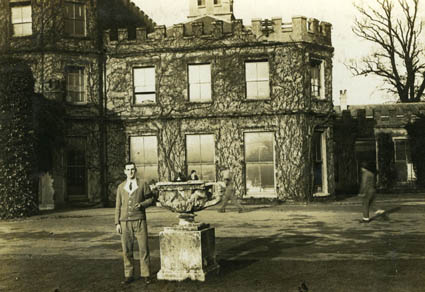
Grey Towers mansion. The patient is wearing the characteristic white lapel jacket

New Zealand soldiers were involved in the disastrous Gallipoli campaign. They were redeployed to France suffering mass casualties. Field hospitals ‘patched-up’ soldiers but the severely injured came to Britain. “The aim was to return soldiers to the Front within six months; if the prognosis was longer, it was considered economic to send them back to New Zealand.”1 (my emphasis)

Grey Towers was quickly expanded with many huts for patients. This one is a massage room
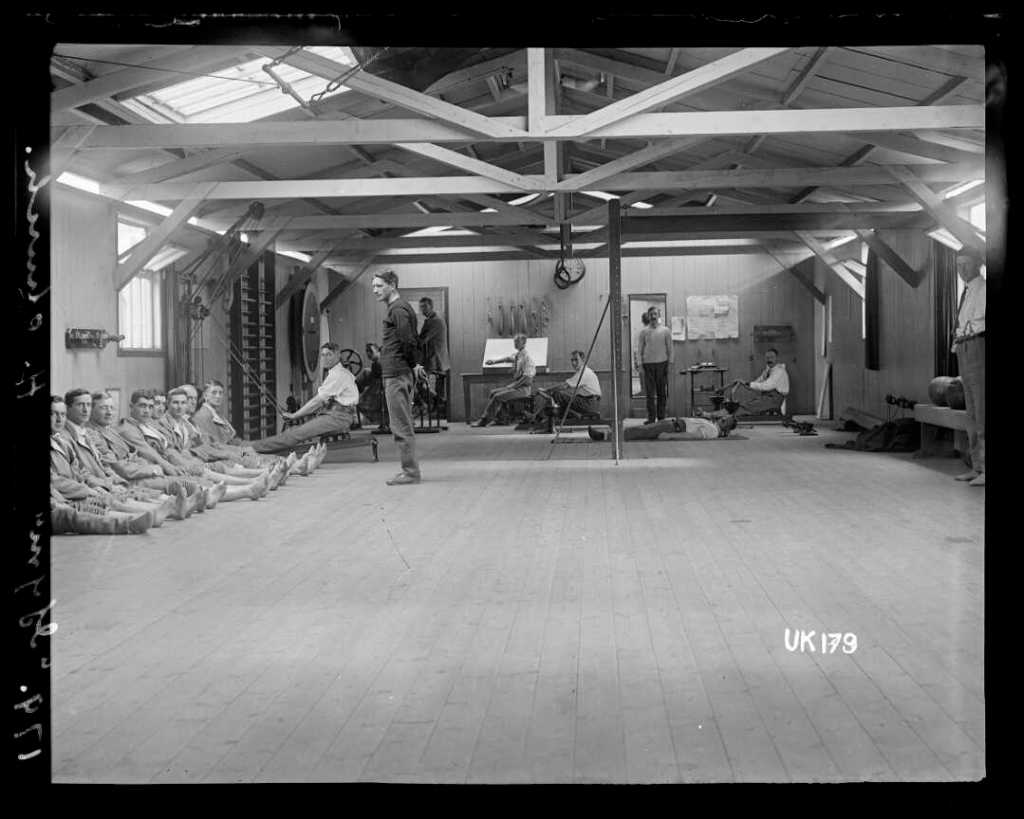
This hut was their gym where they built up their strength prior to returning to the frontline in France

New Zealand’s commitment was stupendous. By Armistice Day, “[there were]…..more than 16,000 New Zealanders dead and tens of thousands more wounded – over 5,300 soldiers died in 1918 alone.2

Grey Towers, Hornchurch was their centre for convalescence from 1916, which expanded into a 2,500 bed hospital, “A well equipped physiotherapy department with the capability for treating 400 patients daily was set up. By the end of 1918 about 20,000 patients had been treated at Hornchurch.”3

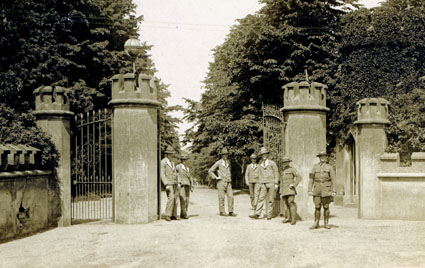
The Grey Towers entrance gates with patients and guard

Hornchurch, an Essex village, saw the conversion of Grey Towers from a family home into a military hospital.

This had a huge impact. There was tremendous goodwill towards the New Zealanders. The hospital also provided many job opportunities.

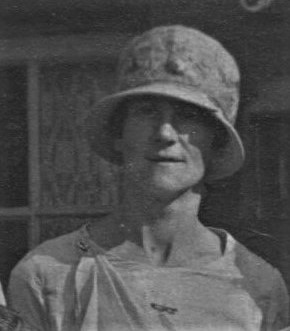
Lydia Philpot, a local resident who worked in the mansion as a young women. This photo is from the early 1920s

Sadly some patients didn’t live to return to New Zealand and there are graves in St Andrew’s churchyard.

Notes

1 Lost_Hospitals_of_London (myzen.co.uk)

2 New Zealand in 1918 – Armistice Day | NZHistory, New Zealand history online Their population was 1,150,000 New Zealand at War 1914-1918 (presbyterian.org.nz)

3 NZANS History – 1915-1922

Photographs

All photographs are from Page 1 of 2 | Items | National Library of New Zealand | National Library of New Zealand (natlib.govt.nz) Except the photo of Lydia Philpot which is from a private collection

Four Maori Soldiers Buried in St Andrew’s Cemetery, Hornchurch

The sad story of four Maori soldiers buried in Hornchurch in the First World War is tragic. They travelled from the tiny island of Niue (1,500 miles north-east of New Zealand). New Zealand was their ‘home’ government and they went there before embarking for Britain. The journey to Britain1 went via Egypt, where they were trained. In France they fell ill in the gruelling conditions and were evacuated to Hornchurch for convalescence in May, 1916, dying a few weeks later.

They didn’t know, when they volunteered, that war was only one danger, “Pacific soldiers faced language difficulties, an unfamiliar army diet and European diseases.”2 They didn’t speak English and had never worn shoes. The army systematically devalued them because of institutional racism.

The minister of defence, James Allen, wrote to Major-General Sir Alexander Godley, commander of the New Zealand Expeditionary Force, stating, ‘Although they [Maoris] are a coloured race I think it would be apparent on their arrival that they are different to the ordinary coloured race.’ 3

After training in Egypt they went to France and, like many Pacific born soldiers, fell ill. By late May, [1916] 82% of the Niueans had been hospitalised…The arrival of more than 100 Niueans in this small village [Hornchurch] had quite an impact on the local inhabitants, who went to great lengths to make them feel welcome.4

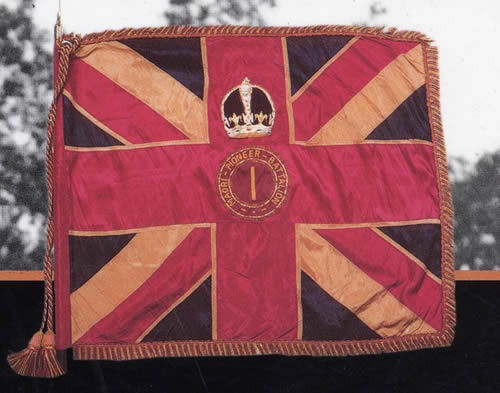
The flag awarded to the Maori battalion in 1918 when they returned to New Zealand

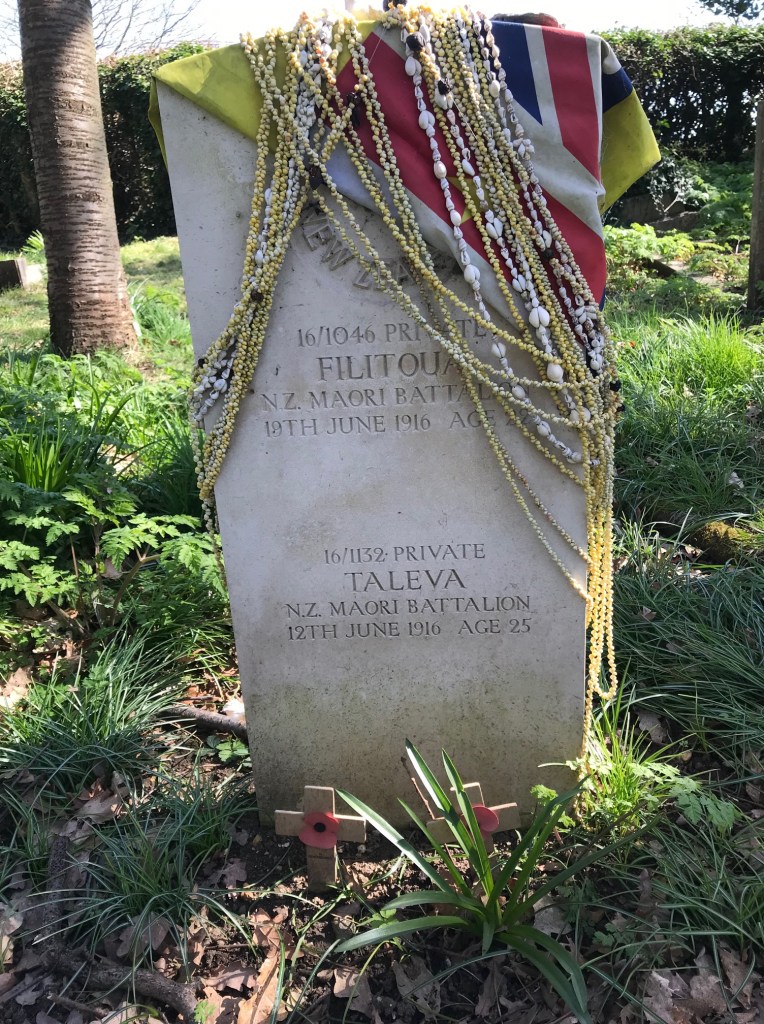
All four died in Hornchurch during June, 1916 from pneumonia. The Maoris were the very first patients in the newly established hospital for New Zealanders. They had no immunity to pneumonia and St Andrew’s churchyard provided both their grave and final insult. Their burial was, uniquely, in double graves. (see below)

They were recently honoured5 with garlands of beads and flags on their graves which are draped there permanently. This a poignant tribute to four virtually anonymous soldiers who travelled thousands of miles to fight for Britain.

Notes

1 It was about 14,000 miles to Britain by sea Sea route & distance – ports.com

2 They came from the island of Niue in the Pacific Ocean. Quote from Niue | NZHistory, New Zealand history online For the island of Niue See Niue – Wikipedia

3 Maori Contingent at Gallipoli – Māori in the NZEF | NZHistory, New Zealand history online

4 For the arrival of the Maori’s see Niueans and Cook Islanders – Pacific Islanders in the NZEF | NZHistory, New Zealand history online For the establishment of the hospital see Lost_Hospitals_of_London (myzen.co.uk)

5 For a very short discussion see First World War centenary: The New Zealand and Maori soldiers who enlivened Hornchurch during the conflict | Romford Recorder

View Post

Havering Sixth Form College

Havering Sixth Form College is focused entirely on Advanced (A) level studies. It has over 2,000 students and is the principal route to ‘A’ levels in Havering. There are six school sixth forms with outcomes below the national and London average.1 But how does the Sixth Form College do?

Havering Sixth Form College doesn’t make a full presentation of examination results.2 The College’s sole function is teaching ‘A’ level and yet the principal stakeholders are denied critical information.

What is that critical information? If you look at the Addendum you’ll see that the Principal has specifically identified certain subject areas as being especially strong in terms of ‘A’ level outcomes.

What he doesn’t do is specifically identify those subjects which have poor or mediocre examination results. Yet that’s information which prospective students absolutely need if they’re to make informed choices.

Although most students on A-level courses make the progress expected of them, the variation between different subjects is too great. Leaders and managers recognise the areas of weaker performance and are taking appropriate action to remedy them.”3 (my emphasis)

Avoiding scrutiny of examination results means prospective students are deliberately misled. They deserve better. Six schools provide ‘A’ levels and students who chose the College need to know that it’s superior to their school. This is impossible as there’s no relevant data readily accessible to the students. The transformative significance of choosing an ‘A’ level course means that students should have transparent information. The PR approach to the presentation of examination results by the College is almost criminal.

Addendum: ‘A’ level examination results

“I am delighted to announce fantastic outcomes for our students at Havering Sixth Form in 2019. The A Level pass rate, passes at A* and A, high grades A*-B and grades A-C are all excellent.

  • 95% overall pass rate
  • 117 students achieved A*-A
  • 419 students achieved A*-B
  • 876 students achieved A*-C

In addition, 100% pass rates were achieved in many courses with almost all attaining pass rates in excess of 93%.

Students achieved fantastic results on many courses, including facilitating subjects favoured by the Russell Group Universities: Chemistry, Computer Science, English Literature, Spanish, and the arts – Textiles, Photography, Graphics, Architecture & Interior Design and Fine Art.” (my emphasis – is ‘fantastic’ really appropriate in the presentation of examination results remembering it has two meanings?)

Paul Wakeling, Principal

See Results – Havering Colleges

Notes

1 See (Public Pack)Agenda Document for Children & Learning Overview & Scrutiny Sub-Committee, 04/03/2021 19:00 (havering.gov.uk) especially p23, Table 10a The chair of the Children’s committee, Judith Holt, was shocked to find out that school sixth forms are mediocre. She’s been chair for three years. What’s she been doing apart from picking up £44,000 in allowances?

2 Only three out of eighteen academy secondary schools publish their GCSE results in full

3 See OFSTED Report Ofsted_2018.200747139 (6).PDF p8

Havering Children’s Overview and Scrutiny Committee: 4th March, 2021

Uniquely this committee has non-councillor members. The non-councillor members had read the papers, understood them and discussed knowledgeably with the Director. They were doing Overview and Scrutiny(O/S) committee work, they cared about the importance of the task.

Item 61 concerned secondary school outcomes. Key comparators were graphed, supported with text. This showed Havering has a mixed outcome, a critically important issue. Six councillors sat silently in their living rooms.2Every non-councillor member spoke, making valuable contributions.

Robert South, the Director, stated Havering’s educational legacy is under-achievement. His mission is, ‘Aspiration and Ambition’. The chair was reluctant to press the Director saying certain matters should be discussed ‘outside’. Councillor Gillian Ford pointed out O/S committees were formed to publicly discuss important issues.

The Director said there was a significant ‘drift’ of Havering’s students going to Brentwood schools. A non-councillor member said her child was going to Chelmsford as Havering’s schools aren’t good enough. Havering’s ‘A’ level results are weak. Judith Holt said Havering should be above average. Unfortunately Havering’s school Sixth Forms are academies and a law unto themselves.

Item 6 was an hour long masterclass.3 Councillors should watch the webcast to show them what an Overview and Scrutiny committee is. The masterclass was a direct consequence of the participation of non-councillor members. Councillors aren’t doing the job they were elected to do and are failing Havering’s children.

Notes

1 (Public Pack)Agenda Document for Children & Learning Overview & Scrutiny Sub-Committee, 04/03/2021 19:00 (havering.gov.uk) pp13-24

2 The silent councillors were Misir, Durdin, D. Patel, Carol Smith, Whitney and a substitute member. One councillor was AWOL. Havering’s councillors earn about £200 a week and the O/S committee is their principal public role.

3 To see the webcast go to Annotator Player (sonicfoundry.com)

Havering Council Meeting 3rd March, 2021: Budget Setting

Taxes Are What We Pay for Civilized Society1

Damian White (Con)2 Damian did entry level bragging about his ‘leadership’ skills. He said other councillors should watch and learn. He discussed the 2020 RA’s budget proposals in a failed political demolition job. Rainham’s flooding problems can be resolved, he claimed. All that’s needed are gutter cleaners when heavy rain is forecast: well good luck with that. The Covid-19 victims (880) are to be memorialised with tree planting. (30)

Ray Morgon (RA) There was a sharp change in intellectual climate with Ray’s speech. It began with a macro-economic survey and Havering. Covid-19 and Brexit are seen as current negatives. He worried about deskilling senior management and was sceptical of performance indicators. The quality of building work in South Hornchurch was highlighted. The £17 million of efficiency savings were probably a negative for quality. (51)

Chris Wilkins (RA) Chris added little to Ray’s speech. (1:07)

Jeff Tucker (RA) Jeff’s speech was a job application. If the Harold Wood 3 perish next year he’ll be ready! Otherwise it was incoherent drivel. (1:20)

Keith Darvill (Lab) Keith did a forensic survey of the budget, citing page numbers and showing unique command of detail. He said Havering’s challenges began in 2010 being deliberately inflicted by central government. Adult social care is demand led and the entire 3% council tax increase for this is probably insufficient. The additional Covid responsibilities are only partially funded, inflicting yet more council tax pain. (1:39)

Martin Goode (RA) Martin slavishly follows Damian. (1:50)

Roger Ramsey (Con) Roger did a masterclass. Quick, articulate and in command of his material, he shone like a beacon of talent. A political knee-capping job on Keith, Tony Blair and Sadiq Khan showed Damian how to do it. Roger could have increased council tax by a further half million pounds. That he didn’t is economically illiterate because Roger is unashamedly political in everything he does. No posturing, just steel. (1:53)

The next five speeches were generic, which went along these lines: 1) Covid has caused significant problems; 2) I’m wonderful; 3) My staff are hard-working; 4) We’ve had tremendous successes; 5) The RAs are awful except for; 6) Jeff Tucker.

Jason Frost (Con) (2:03)

Osman Dervish (Con) (2:12)

Robert Benham (Con) (2:22)

Viddy Persaud (Con) (2:33)

Joshua Chapman (Con) Of the five cabinet generic contributions, this was the best. (2:44)

After an hour of cabinet reports, opposition members were permitted to speak. They’d waited two hours fifty-two minutes for the opportunity. Damian dodged accountability with his cynical manipulation of the speakers’ roster. It was an abuse of elected members who wished to speak for their communities.

Denis O’Flynn (Lab) Denis is a politician to his fingertips and has had a long and distinguished career. He brilliantly refuted Roger’s history lessons about why Havering is in dire straits. The recalibration caused by the collapse of Poll Tax meant that from 1991 Havering was doomed to under-funding. He brushed off the cheap points Benham made. (2:52)

Ron Ower (RA) Ron did a terrific job, especially focusing on the capital receipts programme of the next five years. He was sceptical of its achievement – probably rightly. The massive IT programme of £34 million seemed to be under-scrutinised, whilst the Adult Services budget was optimistic. (2:56)

Michael Deon Burton (Con) Mimicked the cabinet members. (3:00)

David Durant (RA) Repeated his well-known views on Covid. He made an important point about the ‘floods officer’ who left after allegedly being down graded. Perhaps he knows ‘cleaning gutters’ isn’t a viable response to endemic flooding? Worse, perhaps he said so? (3:04)

Gillian Ford (RA) Gillian is a class act and has a calm speaking voice. She riled at Damian’s cheap point scoring about the lack of an alternative RA budget. She made telling points about system failures. The wrecking of the Overview and Scrutiny committees and cancellation of meetings meant that the administration basically gets a free ride. The ‘Pitch and Putt’ sale rumbles on with the administration increasingly looking as if they’ve under-estimated the Upminster RAs (3:08)

Barry Mugglestone (RA) Barry made a quick point about cancelled council meetings (3:11)

Damian White (Con) Damian appeared to be speaking from an illegal bar with Union Jack bunting and a dart board behind him. His ‘summary’ was a hysterical rant entirely lacking intellectual content. Was he ‘tired and emotional’? (3:12)

Dilip Patel (Con) Dilip murdered the National Anthem. Judith Holt (Con) should take up the baton as she’s a chorister. (3:19)

Damian’s phalanx of poor cabinet speakers lacked fluency and couldn’t sight read ‘their’ speeches. Roger Ramsey, Ray Morgon and Keith Darvill stood out, meeting the demands of the occasion. Others ranged from a blizzard of statistics (Frost), a jog-trot round parks (Dervish), 900 laptops for deprived children (Benham) and various self-congratulatory remarks.

This was an opportunity to demonstrate the Conservative administration fully understands the challenges of Covid, Brexit and seismic changes in working practices in Havering. It was missed.

Addendum Times are in brackets in bold: (53) means the speech began 53 minutes into the webcast. This is the webcast link Annotator Player (sonicfoundry.com)

Notes

1 This is engraved on the Inland Revenue Building in Washington, DC

2 Con = Conservative; RA = Resident Association; Lab = Labour