Back to the Future: learning from history

One proposed approach presented to Cabinet is the development of 18 fully equipped modular home units within the area allocated for the final phase of the Waterloo & Queen Street regeneration scheme, in Romford.1

The Blitz left thousands of people homeless. In 19422 Churchill’s government began planning for housing the homeless post-war. He chose prefabricated houses because they were quick to erect. They were kitted out with equipment considered luxurious,

For a country used to the rigours of the outside lavatory and tin bath, the bathroom included a flushing toilet and man-sized bath with hot running water. In the kitchen were housed such modern luxuries as a built-in oven, refrigerator and Baxi water heater, which only later became commonplace in all residential accommodating.3

Post-war prefab housing, which was intended to be ‘temporary’.

The war bankrupted Britain and the American Marshall Plan4 hadn’t begun.There was a shortfall in building materials making the job harder. Prefab houses were an act of genius. They were built on vacant land. With the destruction of London, there were many sites and further east in Romford.5 Notwithstanding the challenges, they pushed forward immediately in 1945-6.

They planned for 300,000 homes with a life expectancy of 10 years but many lasted far longer. Post-war families were given stability for their families.

Havering in 2025 isn’t recovering from war but has a housing crisis. Because of their statutory duty,

“…..the Council was forced to overspend its temporary accommodation budget by £6 million.6

In 1942 Churchill decided housing was too important to leave to market forces. The Attlee Labour government fulfilled his programme by building hundreds of thousands of houses. 40 years later Maggie Thatcher destroyed public housing, unleashing a crisis.

Will modular houses begin a new era of social housing?

Notes

1 Cabinet approve temporary homes solutions to help tackle housing crisis | London Borough of Havering

2 Prefabs in the United Kingdom – Wikipedia

3 loc.cit. See this site for wonderful insights into prefab houses Prefabs – Palaces for the People

4 Marshall Plan | Summary & Significance | Britannica

5 prefab houses in romford – Search Images

6 Cabinet approve temporary homes solutions to help tackle housing crisis | London Borough of Havering

I’m giving a talk: Are Havering’s secondary schools fit for purpose?

22nd April 2025 at 8pm at Fairkytes Hall, Hornchurch for the Fabian Society

There will be a Q&A session afterwards

Havering’s Commonwealth War Graves

In Britain, the 11th of November is known as Remembrance Day. It is a national event marked by elaborate public ceremonies. It is a historic day celebrating those who’ve made the ultimate sacrifice. Memorials include the Sanders Draper1 academy, which was named after an act of outstanding heroism.

During the First World War nearly a million British men died. They are memorialised with plaques in churches and public places. The Commonwealth War Graves (CWGC) was a government body who recognised that the majority of men died abroad and ensured that they were buried with full military honours.2

The Commission created marvellous sites, which are now part of British culture. There are escorted tours to share to maintain the historic connexion (see addendum).3

In Havering the eleven CWGC sites range from the elaborate to the anonymous. These sites are the burial place for 328 men. The largest is Romford cemetery with 119 graves and the smallest is Havering-atte-Bower (St John) with two.

The CWGC have graves in religious and secular sites. For example, St Andrew’s, Hornchurch and the adjacent cemetery are separate sites. In Rainham the Jewish CWGC site has graves integrated in the main body of the cemetery.5

The CWGC have graves in religious and secular sites. For example, St Andrew’s, Hornchurch and the adjacent cemetery are separate sites. In Rainham the Jewish CWGC site has graves integrated in the main body of the cemetery.5

Remembrance Day brings into sharp focus the sacrifice of previous generations. In Havering, respect for The Fallen is woven into the environment.

Addendum: Thiepval memorial

This memorial is in the Somme. The cemetery has 72,320 graves.4

Addendum: Havering’s CWGC sites

Noak Hill (St Thomas)

Hornchurch (St Andrew’s)

Hornchurch cemetery

Romford cemetery

Upminster (St Laurence)

Upminster cemetery

Rainham (Federation) Jewish cemetery

Rainham cemetery

Havering-atte-Bower (St John)

North Ockendon (St Mary Magdalene)

Cranham (All Saints)

Notes

1 Raimund Sanders Draper – Wikipedia

2 Search Results | CWGC The website says access to their cemetery in GAZA is inaccessible because of the war there!

3 Havering – Greater London Lieutenancy see also War Graves Pilgrimage | Leger Holidays This is just one example. NB The use of the word ‘pilgrimage’ making it quasi-religious.

4 Thiepval – Wikipedia see also Thiepval Memorial | Cemetery Details | CWGC

5 Private Stephen Shuster | War Casualty Details 2426994 | CWGC This provides additional detail for Stephen who was 19 years old when he died.

Hornchurch Country Park: Squadrons Approach to Berwick Ponds

There are number of walks beginning in the Country Park’s spacious car park. The easiest is walking in a more-or-less a straight line down to Albyn’s Farm pond and returning for a cup of tea at the lovely cafe. The walk has a good surface for its entire length so ordinary shoes are OK. There are views about half way along from the top of a steepish slope. This is wonderful if you have a child who wants to run and suddenly realises it’s steeper than it looks.

Both walks are about two miles.

The next one is with the café to the left. Keep going for about a quarter of a mile and turn left. In front of you is a Bailey Bridge. This is a relic of the Second World War. It was originally used by the army in Europe after D-Day.

A Bailey Bridge in use in 1944 in France

After the bridge walk about 100 yards. There’s a signpost, which is easy to ignore as it has graffiti on it, but go to the right. You are leaving the gravel path and the surface is unmade. Walk for about 300 yards and there is another signpost. Take the route to Berwick Ponds. Again, the path is unmade. If there has been a lot of rain it will be muddy!

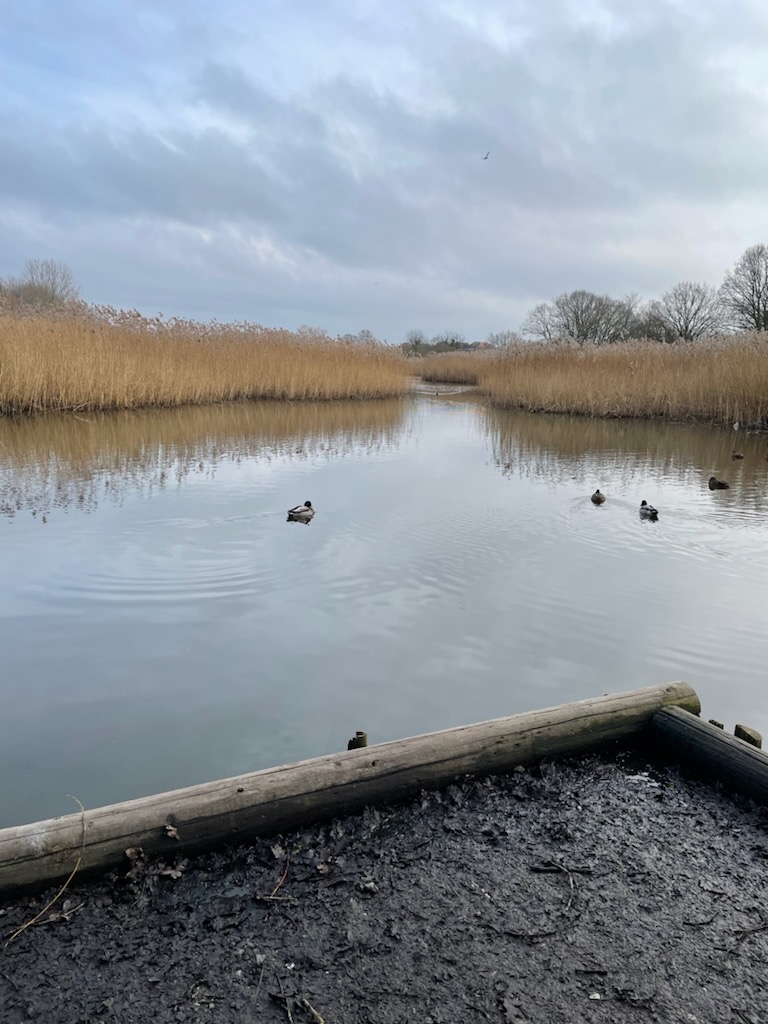
The ponds are serene and will reward for your efforts. The café is a great place to reward yourself after your exertions.

photograph Graham Carr Taken in late January 2024

Sir James Oglethorpe Primary School, Upminster

This school is named after a fascinating man who had many careers. He was an MP for 32 years,1 a soldier and an important social reformer. He never lost his desire to make the world a better place. His career as a reformer began in 1729.

His first opportunity came when he became the chair of the parliamentary Goals Committee, 1729. He believed that criminals living in a different environment would thrive and become law-abiding. This was especially true of those imprisoned for debt.2 Debtors were only released when they paid their debt. Consequently, they were imprisoned for very long periods.

Oglethorpe was Georgia’s first governor from 1732. He stamped his authority on it as a social reformer. He banned slavery in 1735 because it’s brutal and amoral. He also banned alcohol, which he felt ruined many lives.

Oglethorpe’s beliefs about slavery were seen as bizarre. Slavery was normal in parts of the British empire. Oglethorpe opposed slavery 125 years before Abraham Lincoln. Slavery was introduced in Georgia in 1751 long after he’d returned to England and couldn’t do anything about it.3

He’s inspirational and would be proud to have schools named after him.4,5 His final years were spent in Cranham where he died aged 88 in 1785.

Notes

1 James Oglethorpe – Wikipedia This provides a good quick summary of his life

2 Marshalsea – Wikipedia The most famous victim of this was Charles Dickens whose father was imprisoned as a debtor. Charles Dickens – Wikipedia

3 History of slavery in Georgia – Wikipedia Astonishingly this was under pressure from a clergyman, George Whitefield, a founder of Methodism George Whitefield – Wikipedia

4 History – James Oglethorpe Primary

5 See the Oglethorpe group of schools in Georgia, USA Oglethorpe County School District – Wikipedia And there is a university Oglethorpe University – Profile, Rankings and Data | US News Best Colleges

Havering Museum, Romford

Dedicated enthusiasts created Havering’s museum. Through single minded persistence, they negotiated a wonderful space in the former Ind Coope brewery offices. After the consolidation of breweries1 the land in central Romford was sold off and Ind Coope ceased to operate. The vacant space was gifted to the museum.

This was take-off! Getting the space was one thing, using it creatively was quite another. Curating a collection attractively and retaining meaning is demanding.

The entrance to the museum is through a historic doorway. This statement of intent is immediately enjoyable. The museum is run by volunteers, opening three days a week.2 There is a token entry fee of £3 (less for OAPs). The imposing high ceilings produce a sense of space and elegance.

Free standing units are well located. Every area of Havering is acknowledged with their own displays. There are media interaction booths. The multitude of artefacts, photos, paintings, posters, historic maps, and a working historic clock embrace the visitor. Havering’s history emerged from medieval palaces and churches but was turbo-charged in the 19th century. There’s the novel insight that Havering was a tourist spot for those living in inner London.

I went to the museum by myself and a friendly, knowledgeable volunteer guided me through the collection with pride. She has every reason to be proud. It is a small, vital celebration of Havering.

Warmly recommended.

Addendum

There is a talk on Bedford’s Walled Garden on the 26th April 2023. On 20th May 2023 there’s a talk on The A-Z of Victorian Crime 1:30 to 3pm

Website www.haveringmuseum.org.uk

Notes

1 Ind Coope, Romford – A History – Brewery History Society Wiki

2 Wednesday, Thursday and Friday 11am – 4pm

How Medieval People Saw St Andrew’s Church, Hornchurch

All the people you live among will see the Lord’s work, for what I am doing with you is awe-inspiring. Exodus 34:10

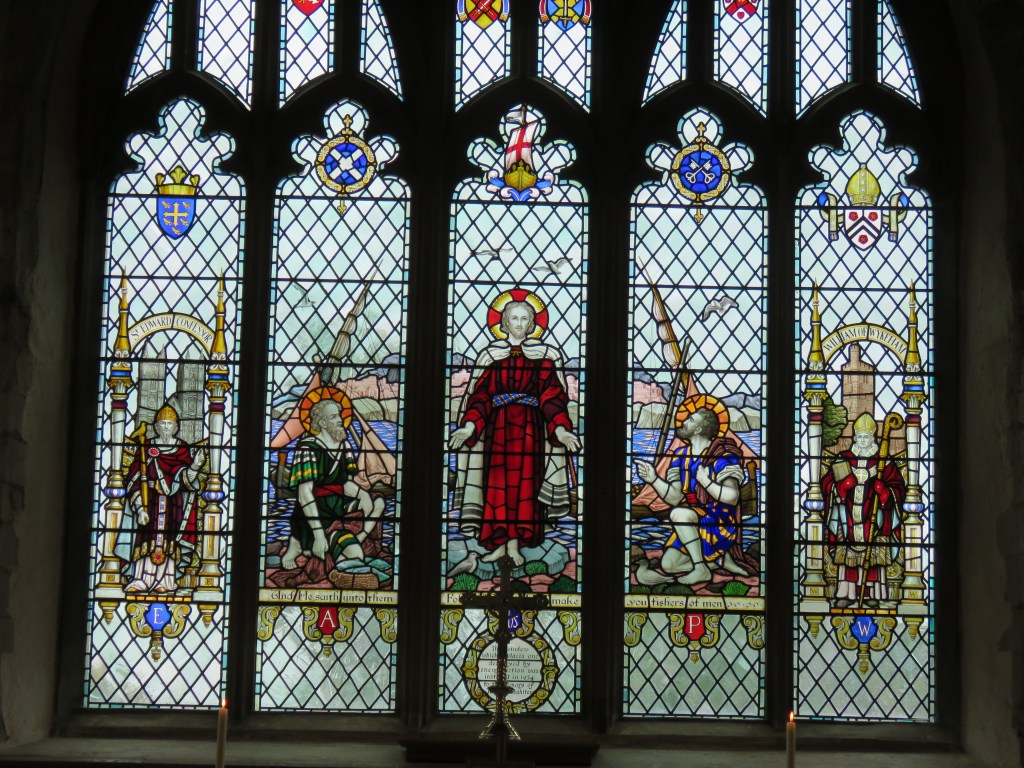
In the 21st century people accept high buildings as normal. This wasn’t the case in the Middle Ages and St Andrew’s1 was huge by their standards. Poor people lived in hovels and even merchants lived in relatively small houses. St Andrew’s is built on high ground, so worshippers walked up the hill to the church which loomed above them. Churches were the physical embodiment of God’s power and presence on earth.


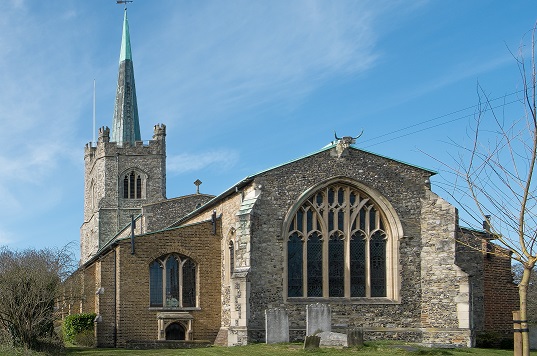
St Andrews church exterior showing the bulls horns
In medieval times there wouldn’t have been any furniture and that would have further impressed the congregation with the enormous size of the church

Ordinary people lived in hovels,

“…[hovels are] made out of straw and many other things, including dung and mud. The houses were very simple. A fire in the middle of the house is where all the people would cook. They would have a couple of pots and pans. The furniture was normally a small wooden table and a little stall that they had made themselves. They would have a wooden bowl and spoon to eat with. The floor below them was not floor, it was the earth.”2

For most people the altar window was the only window they saw regularly. As they walked towards the altar rail, during mass, it seemed to increase in size. This was especially true when the sun shone through the glass. The religious artwork was inspirational and compelling.


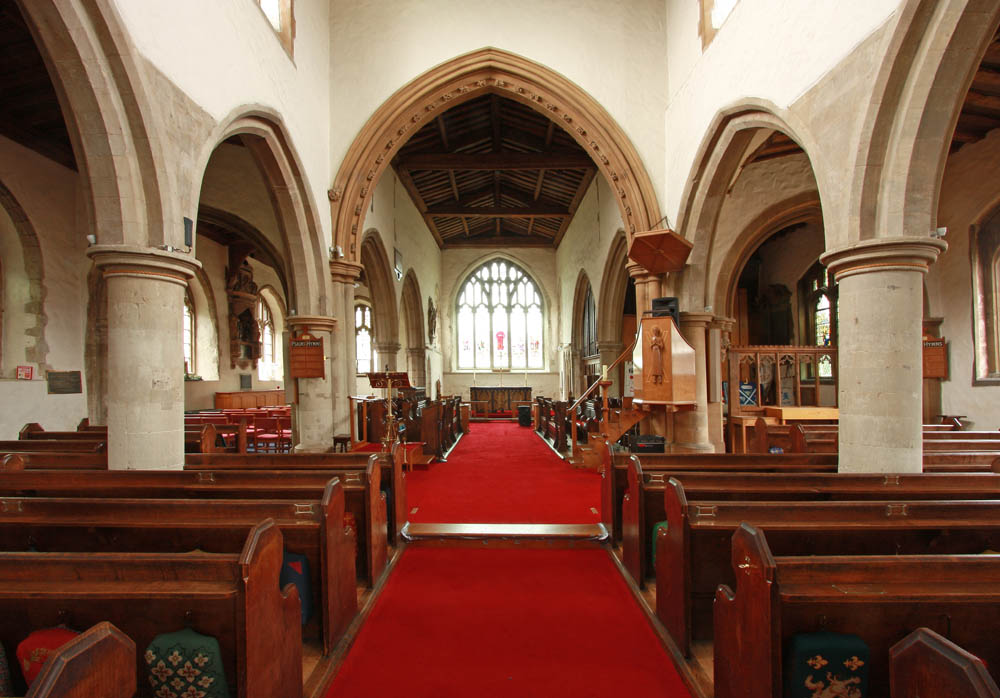
The altar window is physically impressive towering above the altar

The nave didn’t have furniture, which emphasised the awe-inspiring nature of the building. Its height was a multiple of a person thereby subliminally introducing the idea of heaven as a physical concept. St Andrew’s was a religious building cementing beliefs.

Addendum: St Andrews today

St Andrew’s is a Grade 1 listed building of national importance. The suburban sprawl of Hornchurch hasn’t ‘buried’ St Andrew’s and it retains its classic commanding position.

Notes

1 What does grade 1 listed mean (houseprofessionals.com)

2 Homes and Lives of the Poor – Tudor Times (weebly.com)

The Power of Positive Politics

Visitors to the Ingrebourne Hill Country Park1 don’t realise that it was once an environmental disaster zone. There were major fly-tipping problems, rat infestation, motor-cycle nuisance and horses were tethered and left over the winter months, many of whom starved to death. In the long hot summer of 1976 major fires happened frequently because of the rotting waste producing methane gas. On at least two occasions the flames rose above the height of the houses.

Airfield ward councillors Ray Emmett (1982-2002) and Chris Purnell (1990-2002) led a campaign for a positive environmental solution, with the Labour Administration. There was a wonderful proposition, which resulted in the country park. Nothing less likely could have been imagined. Derelict land ravaged by decades of abuse was given an enormous facelift to the benefit of the entire community.

But there was a cost. The land was used as a dumping site for inert waste from all over London with hundreds of lorry movements each month. Simultaneously there was gravel winning which also meant a great deal of industrial activity. Ingrebourne Hill was engineered using that inert waste and then capped and sculpted into what it is now. The lake which is adjacent was the result of the gravel winning. Years of disruption for the Park’s neighbours have been richly rewarded.

The Ingrebourne Hill Country Park has mountain bike tracks, a short and challenging climb to the top and also, less energetically, gentle walks through to Albyns Farm. A further cost was the political careers of the Labour councillors who promoted that vision, which took just too long for the voters to see through to fruition.

Note

1 Ingrebourne Valley | The London Borough Of Havering

Langtons Gardens, Hornchurch

Langtons Gardens doesn’t have Havering Park’s magnificent redwood trees, or the broad acres of Hornchurch Country Park. Nor does it have a deer park with vistas across Havering that are so good they could be prescribed by your GP. Right in the centre of Hornchurch the gardens are the beating heart of the urban area.


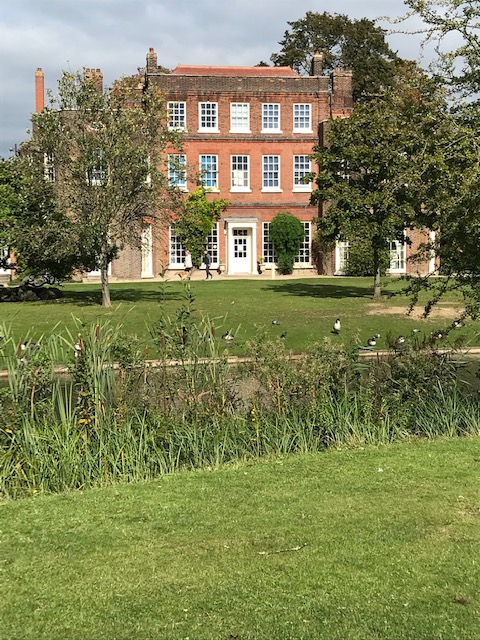
The Georgian house in Langtons Gardens. It’s now a wedding venue

Covid-19 has taught us about the critical importance of parks. Havering is blessed. Langtons Gardens are part of Havering’s historical legacy, which is very easy to take for granted.1 The magnificent gardens are maintained at a very high level, which is essential because they are under constant pressure by thousands of visitors. The garden’s constant improvement has seen a cafe opened and public toilets.

The lake in Langtons Gardens with the Georgian house in the background

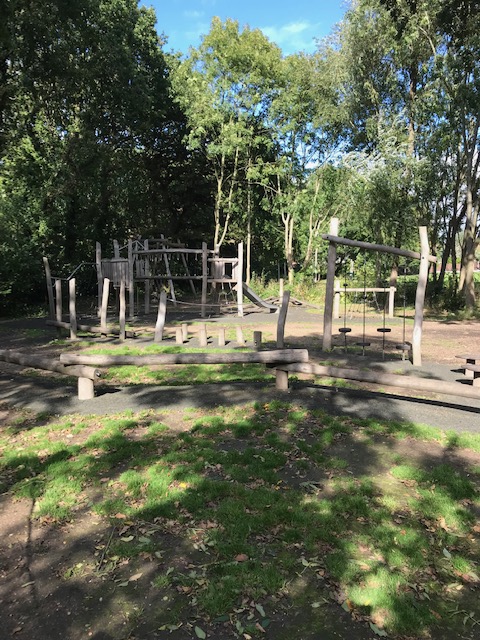
Langtons has a wonderful Georgian house and Orangery. These are picture perfect for wedding photos. The gardens include lawns, flowerbeds and a large lake. The pathways are smooth and readily accessible by everyone. There are numerous benches. After Fielders Field was opened there are more extensive walks. In the summer Fielders Field is used for cricket. Young children use the woodland adventure playground.

The woodland play area for children

Langtons Gardens are a delight and a credit to Havering Council.

Note

1 Langtons Gardens, Havering | GoParksLondon

Havering’s Council Meeting: 1st September, 2021 (part one)

The tributes to former Mayor and Councillor Del Smith dominated this Council Meeting. As usual there were eulogies.1 On this occasion they weren’t pro forma crocodile tears.

Del was Harold Hill’s outstanding councillor during the 1980s and 90s. At the meeting, six councillors knew him personally, 23 years after he left council. This demonstrates Havering’s political stability.

Roger Ramsey, Havering’s classiest councillor, began. Roger’s an outstanding speaker and looks like a nice old gentleman. He’s a ruthless political operator though. Del wrecked the Labour Administration in 1996 over a matter of principle.2 Ignoring trivialities, Roger allied the Conservatives with Del’s Socialist group to get glittering prizes. Roger also did a deal with the Residents’ Association (RA). Desmond Tutu’s Rainbow Nation3 became Havering’s Rainbow Alliance. Del was very witty.

Del created the ultimate political group. Very left-wing Socialists with Conservatives and crypto-Conservative RAs. It was hilarious. Del laughed for two years. His mastery of Havering’s politics equalled Arthur Latham4 and Roger. When Del became Mayor, Andrew Rosindell5 choked. But as Roger said, Del was a superb Mayor who orchestrated debate like a maestro.

All six eulogies were sincere and wonderful to hear for those of us who knew him. On a personal level I’ve lost a very dear friend who I mourn.

Notes

1 To watch the eulogies see Annotator Player (sonicfoundry.com) From 7 minutes to 26. This includes a minutes silence.

In speaking order: Roger Ramsey, Linda Hawthorne, Ron Ower, Keith Darvill, Brian Eagling and Denis O’Flynn. Ray Morgon and Jeff Tucker spoke but didn’t know Del personally.

2 For a massive blow-by-blow account see Del’s Arthur Latham, my part in his downfall (friendsofdagnampark.org.uk) For my critique of Roger see Havering Councillor: Roger Ramsey (Emerson Park) – Politics in Havering

3 Having Conservatives and RAs in a group, with Socialists, epitomised his style. For Tutu’s Rainbow Nation see Rainbow nation – Wikipedia

4 Arthur Latham was an ex-MP and Leader of the Council. He was a restless political operator who never accepted peace and quiet. He didn’t realise that other people were also cunning.

5 Andrew took the cowardly way out of his problem. He couldn’t vote for Del – a Socialist – and he couldn’t defy Group Leader, Roger Ramsey, so he left the chamber until after the vote. This amused Del.

Havering’s Concrete Barges: relics of World War Two

In 1986 Correlli Barnett wrote The Audit of War. he believed that war speeds up innovation. Obviously not every innovation is successful and some look ridiculous in the cold light of day.1 Barnett’s said the stresses of war creates an atmosphere where creative people can ‘think the unthinkable’ and they get an influential audience. Havering’s concrete barges, which are rotting adjacent to the Rainham Riverside Thames path are a wonderful example of bizarre innovation.They are the remains of concrete, iron rod-enforced ships from World War II. Despite appearances, they are lighter than the water they displace, and so can float.”2

Concrete barges at Rainham Riverside

The Americans developed concrete ships but ours’ were barges meant to transport material across the Channel for D-Day. They were invented to overcome a dangerous shortages of steel, which was used for strategically important munitions.

The Rainham Riverside walk starts at a small car park and the concrete barges are adjacent on the edge of the Thames. These 16 historical curiosities are part of Havering’s heritage. If you continue walking eastwards (towards QE2 bridge) you reach the RSPB reserve, which has a visitor’s centre, cafe and fascinating wildlife with accessible paths and viewing points.3 This is an easy walk but there aren’t many benches.

Notes

1 An aircraft carrier made from a mixture of wood pulp and ice is certainly innovative but??? See Project Habakkuk – Wikipedia

2 See Thames History at Rainham (londonriversidebid.co.uk) See also the excellent blog Rainham Marsh Concrete Barges – Beyond the Point and also 16 Ships Made Of Concrete, Hiding In The Thames | Londonist

3 untitled (rspb.org.uk) This shows you the circular walks which are available