Havering’s International Hospitality Hub: Hornchurch

Fluttering St George’s Flags announce English patriotism on Hornchurch High Street. On either side of those flags is international hospitality. Although I walk on the High Street daily I had no idea how blessed we are with an incredible variety in hospitality. Hornchurch is the hub of this blessing.

It’s about half a mile from Abbs Cross Lane to Station Lane. That half mile has intense activity. There are 43 hospitality businesses plying for trade. They represent a substantial part of the world’s cuisine. Twelve different nationalities can be found (see Addendum)1.

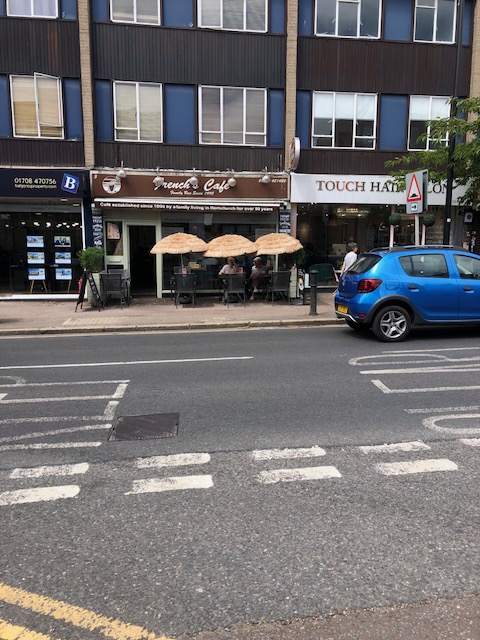
British food is far and away the biggest but doesn’t add up to half of the 43 businesses. Some of are very local. French’s café has been in Hornchurch for 80 years,2  which is the record. Hornchurch has behemoths like J J Moon, and others serving ‘pub grub’. The two Costa Coffee shops are owned by Coca Cola.3  Chains are from all nationalities. For example, the Giggling Squid  is Thai and Nando’s isSouth African.

Conclusion

There is every sort of dining experience in Hornchurch from cafes with a few tables and limited hours, to full-scale dining for a special destination meal.

Addendum: The International scene in Hornchurch

British (16), USA (5), Indian and Italian (4 each), Turkish (3), Chinese, French, Japanese, and Thai (2 each), Greek, South African and Vietnamese (1 each)

Notes

1 Where it is an international chain, I’ve allocated it to the *home* country e.g. Starbucks is American.

2 See Café Society: Hornchurch – Politics in Havering

3 I’ve credited Costa Coffee as British because it started here.

Café Society: Hornchurch

Hornchurch is dominated by national and international brands. They offer bland conformity, loyalty points and saturation advertising to get customers. And they are very successful. Fortunately, independents provide a treasured alternative.

Independents rely on knowing their customers and creating unique, welcoming environments. Staff are encouraged to know their customers and aren’t shy about telling them their name. Not with name tags but with a smile.

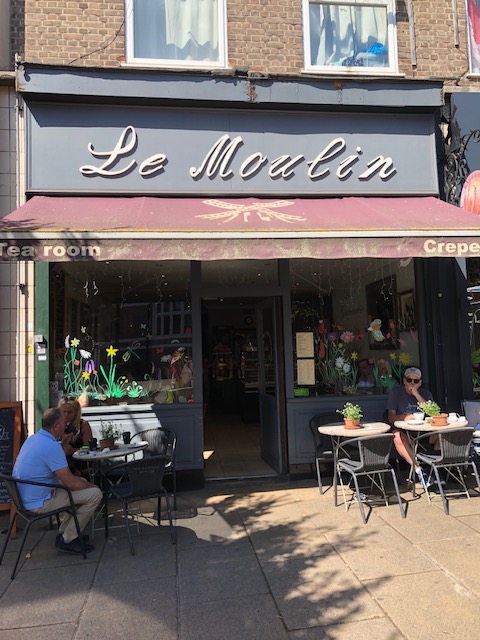
Le Moulin is a café owned by Hélène who is, appropriately enough, French. It is conveniently situated in central Hornchurch, long established and very successful. Its success isn’t because of ‘bland conformity, loyalty points and advertising’. Le Moulin relies on being excellent at what it does. And what does it do?

Obviously it’s a café serving hot and cold drinks but there is an extensive range of patisserie. Patisserie which isn’t mass produced and packaged in a factory. Nor are the cakes manufactured to fit in with a marketing strategy based on price.

There is an extensive offering of cold snacks, sandwiches and small plates of cooked food. These are very popular as are the different breads which are available.

Le Moulin caters for individual events like birthdays with bespoke cakes. And special occasions in the café are celebrated with High Tea. Independents work very hard at meeting the needs of their customers

The only downside to Le Moulin’s success is that it is often necessary to book a table to avoid disappointment. But! What a lovely thing it is that a café in Hornchurch is small and successful.

French’s Café in North Street is absolutely terrific for breakfast and traditional English cooked food. Like all independents, they move with the times working hard at providing a great experience for their customers. Competition is remorseless and they are agile enough to know their customers and their changing tastes.

The Magnificent Two: Hornchurch and Romford

Havering has been named the worst place to live in Greater London in a new study….[because of] natural beauty, wellbeing, heritage and culture, schools and jobs, and value for money.1

There are five categories used in this judgment. The article received wide-spread coverage despite the authors being deluded. Havering has two of the very best centres in outer-London. Focusing on the Magnificent Two:, we find regional centres of excellence in very different arenas.

Hornchurch

Hornchurch is the centre of the regional hospitality scene. Its bustling high street is populated by thriving pubs, restaurants, café society and entry level eateries. To the north is the wonderful Queen’s Theatre, which is the centrepiece of the culture quarter. A quality library, the Fairkytes centre, and a grade two listed building in Langtons, which opens on to Langtons Park. Immediately to the east is St Andrew’s church, which is a grade one building The church is an entry point for the War Graves cemetery.

Hornchurch is an unmistakeable urban masterpiece.

Romford

Romford exists in a challenging retail environment. Think of the competition. Lakeside to the east, Westfield to the west and e-commerce. Multi-billion pounds of predatory retail.

Romford is thriving. Why?

The irreducible fact is that people like shopping near to their homes with human contact. Transport is a key ingredient in Romford’s success story. It’s a transport hub for every element in society. Links to all parts of the borough are quick and easy by public transport and, for car drivers, car-parking is guaranteed on busy days.

The principal shopping malls are attracting new activities, which further enhance the allure[CP1]  of the town centre. An entrepreneur has opened a cinema for a vote of confidence in Romford.

The worst place in Greater London? Balderdash!

Note

1 Havering named the worst place to live in Greater London | This Is Local London


 [CP1]

How Medieval People Saw St Andrew’s Church, Hornchurch

All the people you live among will see the Lord’s work, for what I am doing with you is awe-inspiring. Exodus 34:10

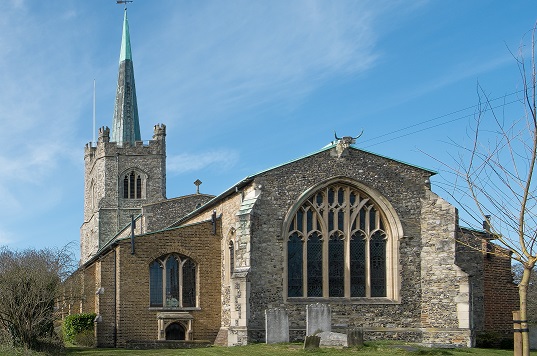
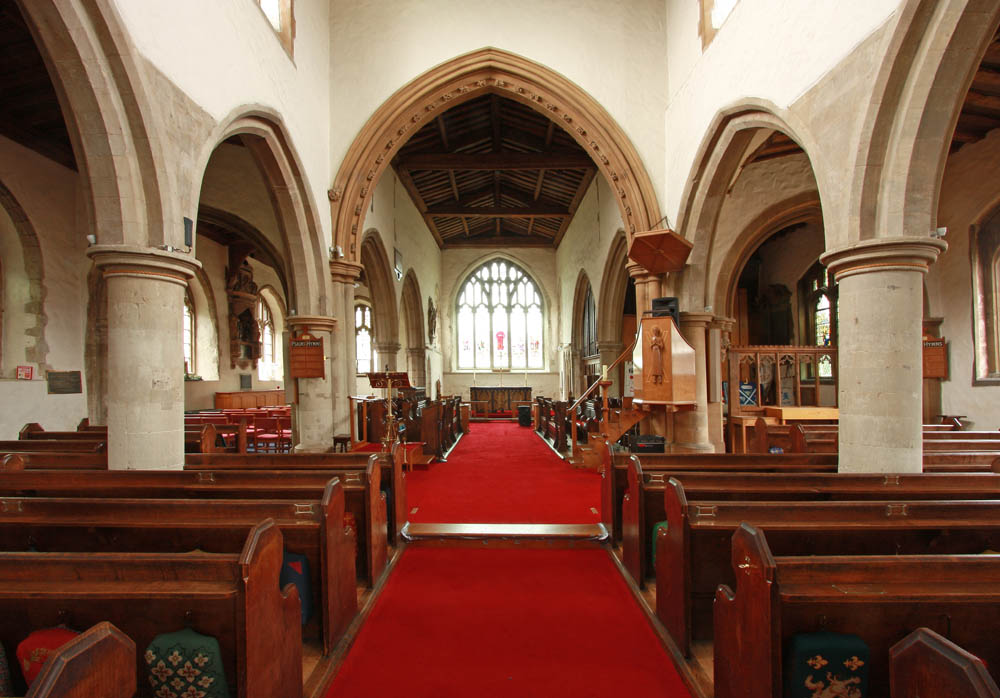
In the 21st century people accept high buildings as normal. This wasn’t the case in the Middle Ages and St Andrew’s1 was huge by their standards. Poor people lived in hovels and even merchants lived in relatively small houses. St Andrew’s is built on high ground, so worshippers walked up the hill to the church which loomed above them. Churches were the physical embodiment of God’s power and presence on earth.


St Andrews church exterior showing the bulls horns
In medieval times there wouldn’t have been any furniture and that would have further impressed the congregation with the enormous size of the church

Ordinary people lived in hovels,

“…[hovels are] made out of straw and many other things, including dung and mud. The houses were very simple. A fire in the middle of the house is where all the people would cook. They would have a couple of pots and pans. The furniture was normally a small wooden table and a little stall that they had made themselves. They would have a wooden bowl and spoon to eat with. The floor below them was not floor, it was the earth.”2

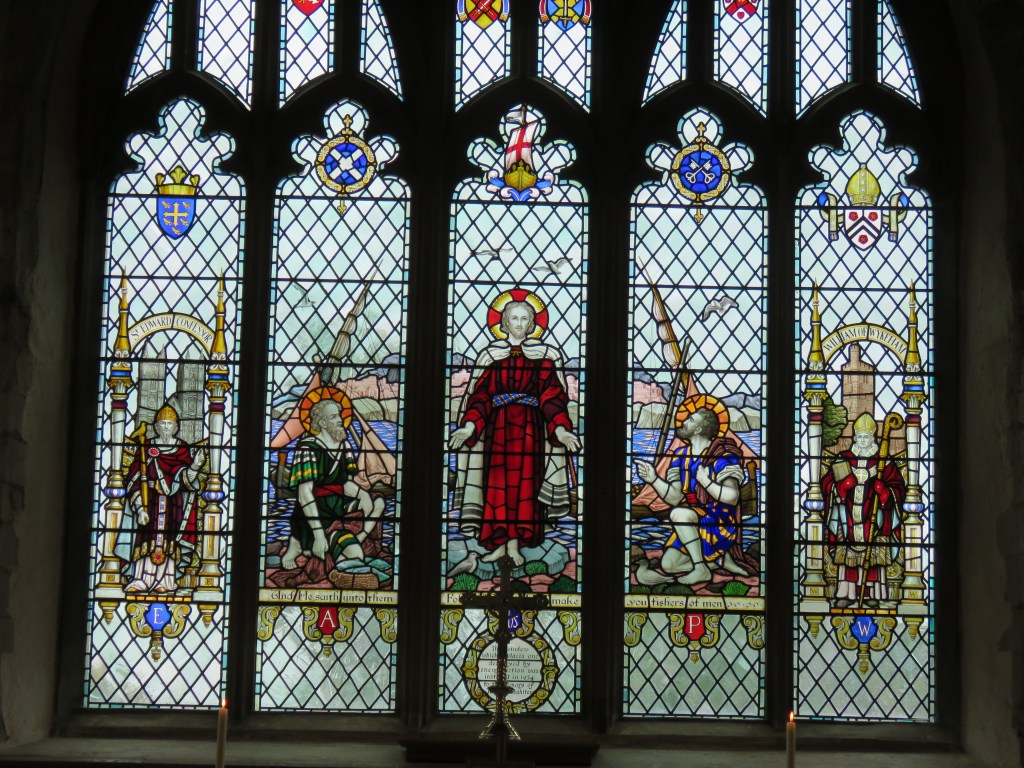
For most people the altar window was the only window they saw regularly. As they walked towards the altar rail, during mass, it seemed to increase in size. This was especially true when the sun shone through the glass. The religious artwork was inspirational and compelling.


The altar window is physically impressive towering above the altar

The nave didn’t have furniture, which emphasised the awe-inspiring nature of the building. Its height was a multiple of a person thereby subliminally introducing the idea of heaven as a physical concept. St Andrew’s was a religious building cementing beliefs.

Addendum: St Andrews today

St Andrew’s is a Grade 1 listed building of national importance. The suburban sprawl of Hornchurch hasn’t ‘buried’ St Andrew’s and it retains its classic commanding position.

Notes

1 What does grade 1 listed mean (houseprofessionals.com)

2 Homes and Lives of the Poor – Tudor Times (weebly.com)

Langtons Gardens, Hornchurch

Langtons Gardens doesn’t have Havering Park’s magnificent redwood trees, or the broad acres of Hornchurch Country Park. Nor does it have a deer park with vistas across Havering that are so good they could be prescribed by your GP. Right in the centre of Hornchurch the gardens are the beating heart of the urban area.


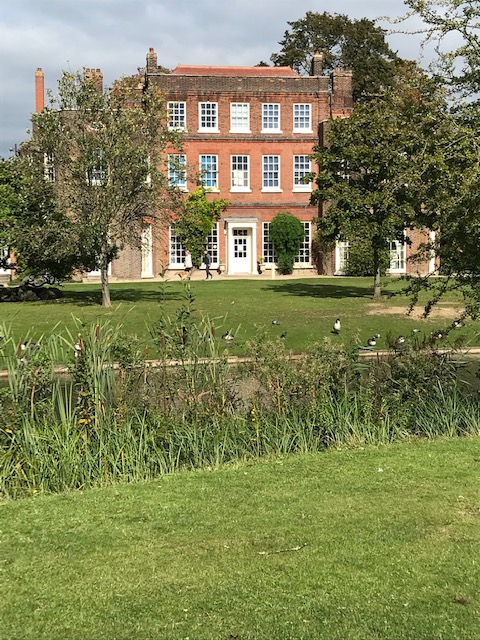
The Georgian house in Langtons Gardens. It’s now a wedding venue

Covid-19 has taught us about the critical importance of parks. Havering is blessed. Langtons Gardens are part of Havering’s historical legacy, which is very easy to take for granted.1 The magnificent gardens are maintained at a very high level, which is essential because they are under constant pressure by thousands of visitors. The garden’s constant improvement has seen a cafe opened and public toilets.

The lake in Langtons Gardens with the Georgian house in the background

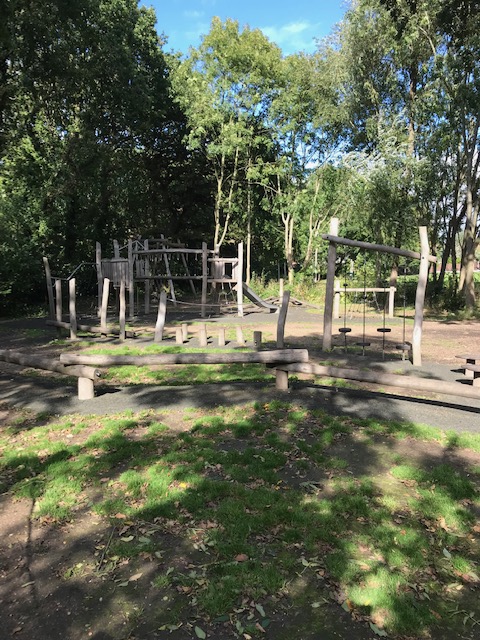
Langtons has a wonderful Georgian house and Orangery. These are picture perfect for wedding photos. The gardens include lawns, flowerbeds and a large lake. The pathways are smooth and readily accessible by everyone. There are numerous benches. After Fielders Field was opened there are more extensive walks. In the summer Fielders Field is used for cricket. Young children use the woodland adventure playground.

The woodland play area for children

Langtons Gardens are a delight and a credit to Havering Council.

Note

1 Langtons Gardens, Havering | GoParksLondon

The New Zealand Convalescent Hospital, Hornchurch, 1916-9

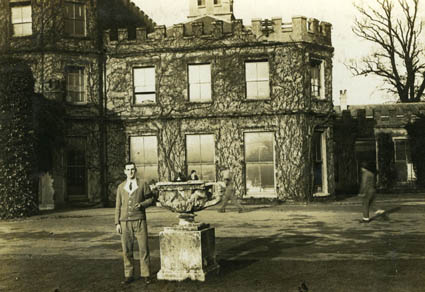
Grey Towers mansion. The patient is wearing the characteristic white lapel jacket

New Zealand soldiers were involved in the disastrous Gallipoli campaign. They were redeployed to France suffering mass casualties. Field hospitals ‘patched-up’ soldiers but the severely injured came to Britain. “The aim was to return soldiers to the Front within six months; if the prognosis was longer, it was considered economic to send them back to New Zealand.”1 (my emphasis)

Grey Towers was quickly expanded with many huts for patients. This one is a massage room
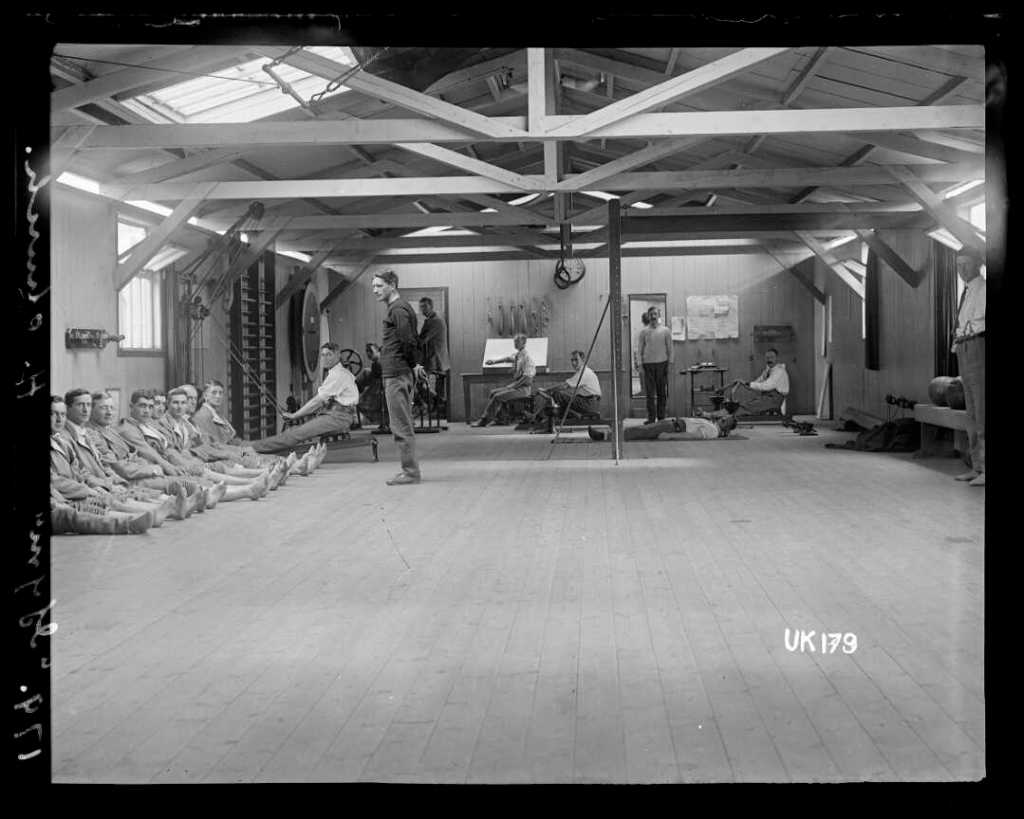
This hut was their gym where they built up their strength prior to returning to the frontline in France

New Zealand’s commitment was stupendous. By Armistice Day, “[there were]…..more than 16,000 New Zealanders dead and tens of thousands more wounded – over 5,300 soldiers died in 1918 alone.2

Grey Towers, Hornchurch was their centre for convalescence from 1916, which expanded into a 2,500 bed hospital, “A well equipped physiotherapy department with the capability for treating 400 patients daily was set up. By the end of 1918 about 20,000 patients had been treated at Hornchurch.”3

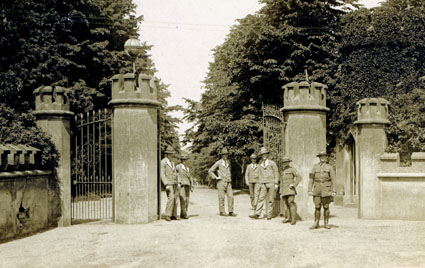
The Grey Towers entrance gates with patients and guard

Hornchurch, an Essex village, saw the conversion of Grey Towers from a family home into a military hospital.

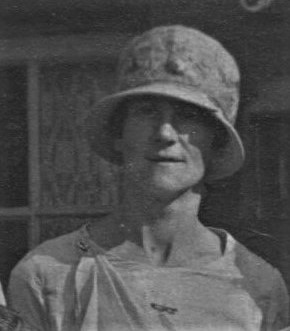
This had a huge impact. There was tremendous goodwill towards the New Zealanders. The hospital also provided many job opportunities.

Lydia Philpot, a local resident who worked in the mansion as a young women. This photo is from the early 1920s

Sadly some patients didn’t live to return to New Zealand and there are graves in St Andrew’s churchyard.

Notes

1 Lost_Hospitals_of_London (myzen.co.uk)

2 New Zealand in 1918 – Armistice Day | NZHistory, New Zealand history online Their population was 1,150,000 New Zealand at War 1914-1918 (presbyterian.org.nz)

3 NZANS History – 1915-1922

Photographs

All photographs are from Page 1 of 2 | Items | National Library of New Zealand | National Library of New Zealand (natlib.govt.nz) Except the photo of Lydia Philpot which is from a private collection

Four Maori Soldiers Buried in St Andrew’s Cemetery, Hornchurch

The sad story of four Maori soldiers buried in Hornchurch in the First World War is tragic. They travelled from the tiny island of Niue (1,500 miles north-east of New Zealand). New Zealand was their ‘home’ government and they went there before embarking for Britain. The journey to Britain1 went via Egypt, where they were trained. In France they fell ill in the gruelling conditions and were evacuated to Hornchurch for convalescence in May, 1916, dying a few weeks later.

They didn’t know, when they volunteered, that war was only one danger, “Pacific soldiers faced language difficulties, an unfamiliar army diet and European diseases.”2 They didn’t speak English and had never worn shoes. The army systematically devalued them because of institutional racism.

The minister of defence, James Allen, wrote to Major-General Sir Alexander Godley, commander of the New Zealand Expeditionary Force, stating, ‘Although they [Maoris] are a coloured race I think it would be apparent on their arrival that they are different to the ordinary coloured race.’ 3

After training in Egypt they went to France and, like many Pacific born soldiers, fell ill. By late May, [1916] 82% of the Niueans had been hospitalised…The arrival of more than 100 Niueans in this small village [Hornchurch] had quite an impact on the local inhabitants, who went to great lengths to make them feel welcome.4

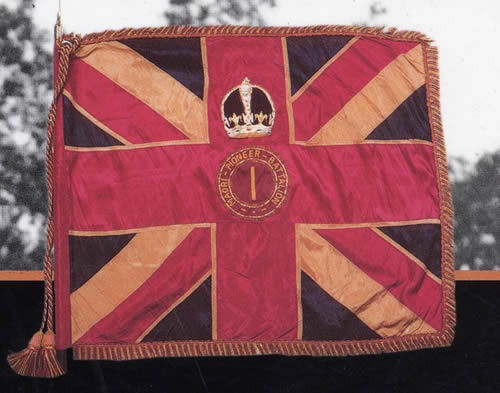
The flag awarded to the Maori battalion in 1918 when they returned to New Zealand

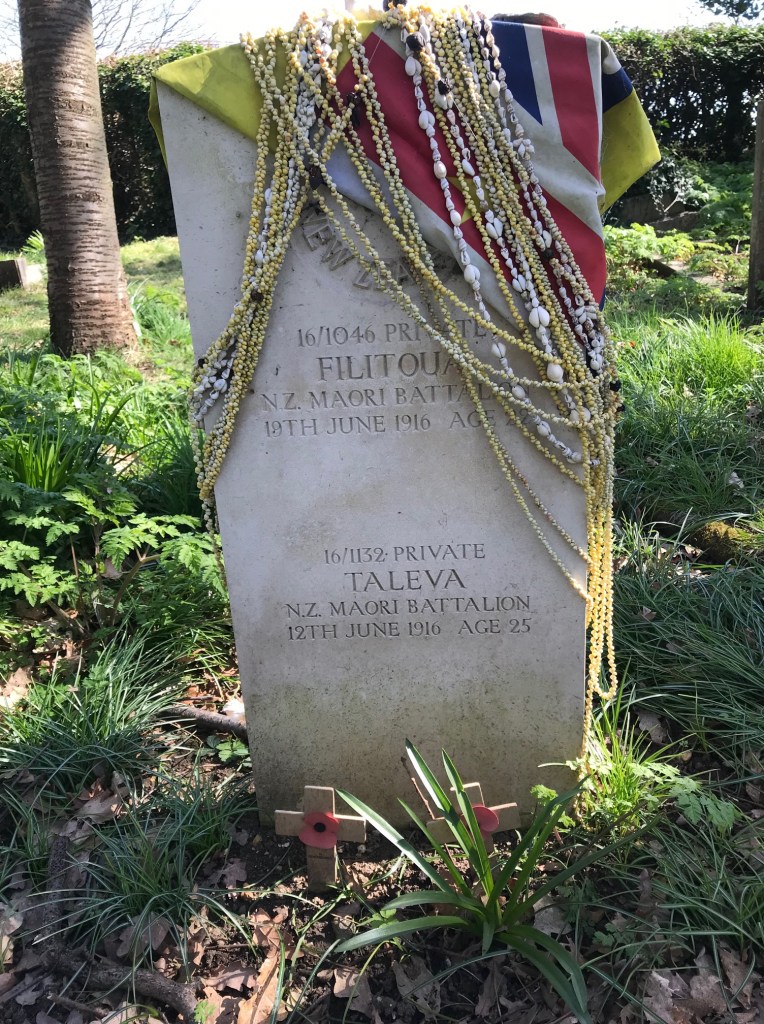
All four died in Hornchurch during June, 1916 from pneumonia. The Maoris were the very first patients in the newly established hospital for New Zealanders. They had no immunity to pneumonia and St Andrew’s churchyard provided both their grave and final insult. Their burial was, uniquely, in double graves. (see below)

They were recently honoured5 with garlands of beads and flags on their graves which are draped there permanently. This a poignant tribute to four virtually anonymous soldiers who travelled thousands of miles to fight for Britain.

Notes

1 It was about 14,000 miles to Britain by sea Sea route & distance – ports.com

2 They came from the island of Niue in the Pacific Ocean. Quote from Niue | NZHistory, New Zealand history online For the island of Niue See Niue – Wikipedia

3 Maori Contingent at Gallipoli – Māori in the NZEF | NZHistory, New Zealand history online

4 For the arrival of the Maori’s see Niueans and Cook Islanders – Pacific Islanders in the NZEF | NZHistory, New Zealand history online For the establishment of the hospital see Lost_Hospitals_of_London (myzen.co.uk)

5 For a very short discussion see First World War centenary: The New Zealand and Maori soldiers who enlivened Hornchurch during the conflict | Romford Recorder

View Post

Hornchurch High School, the Pupil Premium and Accountability

Government guidance for publicising the Pupil Premium on school websites says it should include –

1) a summary of the main barriers to educational achievement faced by eligible pupils of the school

2) how the pupil premium allocation is to be spent to address those barriers and the reasons for that approach

3) how the school is to measure the impact and effect of its expenditure of the pupil premium allocation.*

Hornchurch High received £367,218 Pupil Premium funding (PP), 2020-21, which it spent as it chose. The government does however stipulate accountability procedures. (see above)Hornchurch High’s accountability is a travesty.

Hornchurch High allocates 33% of PP funding to Child Protection. Let’s imagine they’ve identified Child Protection as the main method of overcoming “barriers to educational achievement,” and PP finance is “…spent to address those barriers…” Why wouldn’t they publicise the ”…impact and effect of its expenditure…”? When a third of the PP budget is allocated to a single activity, there should be a compelling reason to justify it. The explanation for the expenditure of the PP funding which remains is equally opaque.**

The attainment gap of disadvantaged children is a scandal which PP funding is intended to close. It’s impossible to know if Hornchurch High is fulfilling its obligations. Another Havering school, Drapers Academy (£384,640 PP), is a model of clarity. Why not use it as a template? Accountability isn’t rocket science.

Addendum: The Partnership Learning trust

They’re part of Partnership Learning academy trust which includes Sydney Russell school, Dagenham (£647,882 pa PP). The two schools have a million+ pounds PP funding of potential synergies. Two schools in the same academy trust and facing the similar issues ought to generate significant expertise.

Notes

* What academies, free schools and colleges should publish online – GOV.UK (www.gov.uk)

** £26,028 for additional English support and £6,000 for additional teaching hours are self explanatory.

Sources

For Hornchurch High school PP see Hornchurch High School » PUPIL PREMIUM

For Sydney Russell school’s PP see Welcome to Sydney Russell School. (follow links for PP)

For Drapers Academy PP statement see Pupil-Premium-Report-2017-2018-v20.pdf (drapersacademy.com)

R. J. Mitchell Primary School: Celebrating Local History

Introduction

R. J. Mitchell didn’t have a direct personal connexion with Hornchurch but in an imaginative gesture his genius is acknowledged by the school named after him. The incredibly courageous RAF pilots who flew out of Hornchurch flew in Supermarine Spitfires, which Mitchell designed. The Spitfire was so advanced and capable as a fighter plane it made victory over the Luftwaffe possible.Mitchell’s Spitfire designs were a crucial contribution to victory by ‘The Few’.Hornchurch is indelibly identified with the battle of Britain, the Spitfire and R. J. Mitchell.

Discussion

The school concludes their brief history of the period by saying,

We do not seek to glorify war, but to remember the sacrifice of brave people in extraordinary circumstances.”

The school reflects the community by honouring the RAF ‘aces’ of the Battle of Britain. This bonds the school with their community. Many of the school’s students come from streets named after fighter ‘aces’ in the immediate area. The school is located in a place which memorialises those fateful years.

Each passing year pushes those existential days further into the mists of history. So does it matter?

History does matter as it gives a sense of place and identity. The rich heritage that is celebrated by R. J. Mitchell School isn’t jingoistic. It’s measured, respectful and is to be applauded.

Sources

For a quick biography see https://en.wikipedia.org/wiki/R._J._Mitchell

For the excellent R J Mitchell School’s celebration of the history of the community see http://www.rjmitchellprimaryschool.com/havering/primary/rjmitchell/site/pages/welcome/historyofourschool

For R J Mitchell School in 2013 see https://www.teachprimary.com/learning_resources/view/outstanding-schools-rj-mitchell-primary

Sponsored Squadrons at RAF Hornchurch in World War 2

An unusual aspect of the Battle of Britain was the sponsored squadron. RAF Hornchurch had its share of these. A sponsor didn’t pay for specific Spitfires. They contributed an amount, which was the equivalent of the cost. The RAF then designated a squadron’s number with the name in brackets. Sponsored squadrons reflected the patriotic feelings of British cities and countries in the Empire. India, which was in the throes of Gandhi’s Quit India movement, contributed a great deal towards the defence of Britain.

Eleven squadrons served in Hornchurch during the war. ‘The Few’ flew from Hornchurch and suffered many casualties whilst defeating the Luftwaffe. Less well known was the international financial support Britain received in this crucial battle. Of Hornchurch’s eleven squadrons, seven were sponsored from across the Empire and Britain (see Addendum).

Financial resources were provided in a great world-wide rush of good feeling towards Britain and were very important to our ultimate victory. This is an unglamorous but important aspect of the Battle of Britain. Nazi Germany’s repulsive government provoked fear, not respect, and these sponsored squadrons demonstrate this truth vividly.

Addendum: sponsored squadrons

Squadron 74 (Trinidad)

Squadron 122 (Bombay)

Squadron 222 (Natal)

Squadron 264 (Madras Presidency)

Squadron 266 (Rhodesia)

Squadron 600 (City of London)

Squadron 603 (City of Edinburgh)

Sources

For Hornchurch’s Battle of Britain squadrons and casualties see http://www.rafhornchurch.thehumanjourney.net/squadrons.htm

For a list of RAF Hornchurch squadrons see https://en.wikipedia.org/wiki/RAF_Hornchurch

For a critical analysis of ‘The Few’ in the battle of Britain see https://www.independent.co.uk/news/uk/this-britain/the-few-who-saved-britain-were-even-fewer-than-everyone-thought-5369212.html

For Squadron 74’s WW2 service history see http://www.historyofwar.org/air/units/RAF/74_wwII.html