Havering Park: an Avenue of Redwood Trees

Havering Park still has the second largest plantation of Wellingtonia in England, totalling 100 trees

*

Havering Park is quite small and undistinguished. It doesn’t have a cafe or a deer park and it definitely doesn’t have stunning views across London. What it does have is a unique avenue of trees: Wellingtonia Avenue.

The Giant Redwood lines Wellingtonia Avenue but because of rapid local changes they go from nowhere to nowhere. They were planted about 140 years ago by the McIntosh family who owned the local mansion. Nowadays they’d be regarded as a foreign invader species but the attraction in the 19th century was that,

Redwoods grow faster than almost any other tree in the world, obtaining 3 to 10 feet of growth per year. Most of this growth occurs in the first century of a redwood’s life.** (my emphasis)

The great 18th century gardens took decades to put together before reaching maturity. The McIntosh family didn’t want to wait. They selected the Giant Redwood. The Giant Redwood lives for 3000 years becoming a monster, which means, barring climate change, they could live until about 5020! Havering Park is blessed with a landscape dominated by wonderful trees.

A short walk on a decent surface means that Havering Park provides a unique experience and is worth a visit.

Notes

* https://www.havering.gov.uk/info/20037/parks/723/havering_country_park

** https://www.gardenguides.com/12378880-how-fast-do-redwoods-grow.html

Sources

For a wonderful set of photographs see http://www.redwoodworld.co.uk/picturepages/havering.htm

For a detailed list of Havering’s principal parks see https://www.havering.gov.uk/info/20037/parks

For an overview of the giant redwood see https://en.wikipedia.org/wiki/Sequoiadendron_giganteum

For an 18th century Capability Brown garden see https://www.nationaltrust.org.uk/stowe/profiles/capability-found-at-stowe

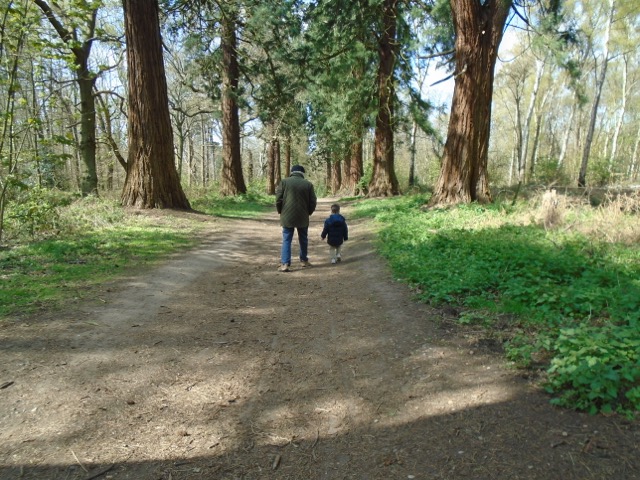
The author and his grandson

The Battle for Tylers Common: Major Geoffrey Bing MP, KC*

Introduction

During the 18th century, wealthy farmers enclosed common land. Poor people had had a traditional right to graze animals and get informal food supplies but they didn’t have documentary evidence of that right. Parliamentary ‘Enclosure’ Acts favoured the wealthy, who used a legal sleight of hand to dispossess them. By about 1850, enclosure was completed with just a few commons remaining. One of these was Tylers Common. The rights of the commoners were defended by the ‘lord of the manor’, the Branfil family.

The Battle for Tylers Common

During the Second World War all available land was utilised. Tylers Common was used for food production by Essex Council from 1943. Unlike the 18th century, 20th century commoners had documentary evidence supporting historic rights. No-one anticipated a land grab by Essex Council.

Geoffrey Bing was the local MP and a very senior lawyer. When commoners approached him about the enclosure of Tylers Common he was outraged. He was a formidable opponent of Essex Council and his forensic probing discovered,

..Essex County Council have…… illegally enclosed this common and let it to one of their members.** (my emphasis)

In the subsequent court case, Essex Council’s refusal to reinstate pre-war common status led to a damning judgment. Councillors were surcharged for wilful behaviour and had to pay costs. Bing, as a lawyer and parliamentarian, trounced Essex Council and Tylers Common remains common land enjoyed by the people of Havering to this day.

Notes

* KC: this is the most senior rank for barristers – nowadays QC

** https://api.parliament.uk/historic-hansard/commons/1951/aug/02/tylers-common-upminster

Sources

For Bing’s parliamentary questioning see https://hansard.parliament.uk/commons/1951-06-28/debates/6364ef34-abb3-4d77-8d58-238964525ea6/TylersCommonUpminster

and

https://hansard.parliament.uk/commons/1951-07-05/debates/cc7314e7-5a6b-4a26-8ad7-cea4a2e0e84a/TylerSCommonUpminster

and

For a Romford Recorder article see https://www.romfordrecorder.co.uk/news/heritage/nostalgia-tylers-common-havering-s-largest-open-space-1-2015231

For a more detailed on-line history of Upminster see https://www.british-history.ac.uk/vch/essex/vol7/pp143-153

For the surcharging of councillors see https://en.wikipedia.org/wiki/Surcharge_(sanction)

For historic maps see https://www.francisfrith.com/tylers-common/maps

For a brief history of common land see https://www.acraew.org.uk/history-common-land-and-village-greens

Harold Hill: The Deer Should be Culled

North Havering has herds of deer. They’re picturesque and delightful to look at but as they’re living in an environment without natural predators, they breed rapidly. Bambi is apparently harmless but in actual fact is a health hazard and causes road accidents.

Bambi is lovable but not in an urban environment.* Deer are wild animals who shouldn’t interact with humans. They have ticks living on them. This sounds harmless but it’s recently been established that ‘Tick Borne Encephalitis’ has arrived in Britain. Encephalitis usually makes healthy people feel mildly unwell but occasionally it’s lethal for the vulnerable elderly and very young. Havering’s deer haven’t had injections and as they migrate into urban areas they bring ticks with them, with the possibility of disease.

Parks in north Havering look like battle zones as they’re systematically destroyed by deer. Natural habitats are stripped bare.
bluebells fir wood
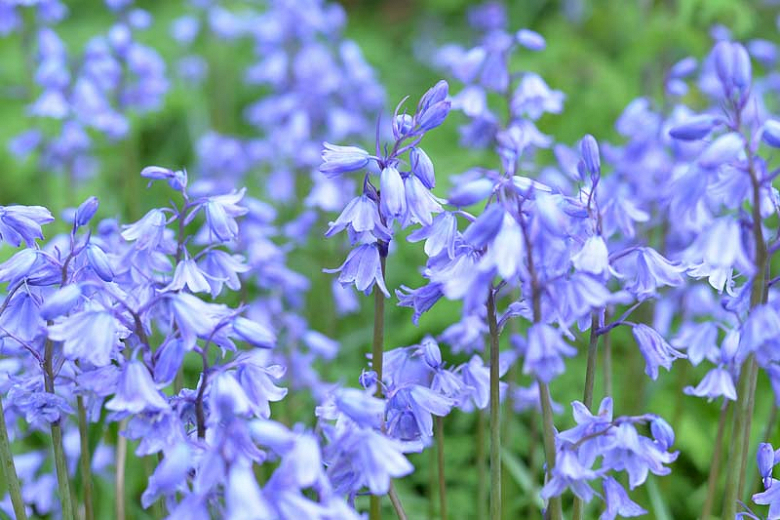
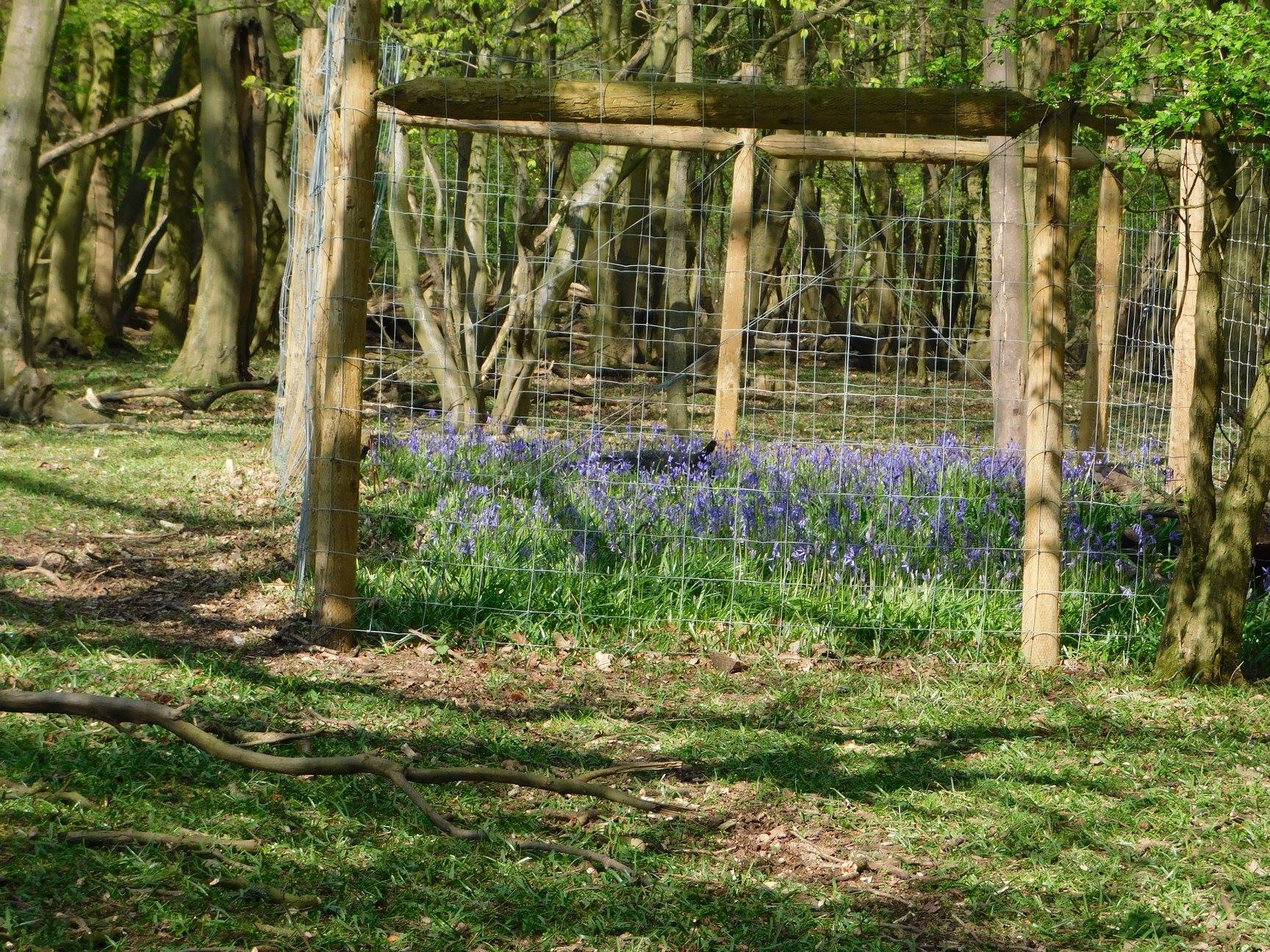
The enclosure is deer proof but everywhere else is unprotected from the deer’s appetite. Deer destroy everything in their path. Bluebells ought to be growing in profusion but it’s a wasteland. Trees are killed when their bark is ripped off.

Deer roam into the Harold Hill estate. Obviously they don’t worry about the Highway Code. So far there haven’t been any fatalities but there has been extensive damage to many vehicles.

Havering’s deer need to be culled before they cause serious road accidents or spread disease. This is a political decision, which councillor Osman Dervish should address urgently.

* https://www.lymediseaseaction.org.uk/latest-news/tbe-has-arrived-in-the-uk/