Havering Council Meeting, 19th November 2025 (part two)

Motions1 probe the Administration. Labour and the Conservatives failed to prove that they are a better alternative.

Labour’s motion was on tree management and falling trees. The Conservatives considered the reduction of hours at Romford Police Station, which Havering isn’t responsible for.

Ray Morgon is lucky having a weak disorganised opposition.

Tree management

Labour: Keith Darvill (1 hour 12)2 blamed ‘climate change’ for falling trees. Jane Keane (1:37) promoted volunteer tree wardens

HRA:  Barry Mugglestone (1:17) was thin skinned. Gerry O’Sullivan (1:33) defended him. Reg Whitney (1:37) said falling trees was a national problem.

Conservatives: David Taylor (1:20) was worried about trees, Judith Holt (1:28) and Tim Ryan (1:35) wallowed in local knowledge.

East Havering RAs: Brian Eagling (1:21) and Martin Goode (1:25) talked about themselves.

Reform: Keith Prince (1:31) nit-picked. He enjoys this even when no-one else does.

Everyone agreed that randomly falling trees are a ‘Bad Thing’.

Romford Police Station

Conservatives: David (1:49) said a 24 hour front desk was vital to public safety. Dilip Patel (2:10) and Judith (2:11) saw a Labour plot in the reduction.

Labour: Keith D. (1:54) thought a review was a good idea. Jane (2:09) said it wasn’t.

Residents’ Association IG: John Tyler’s (1:57) ‘Good Old Days’ thoughts were from his days as a police officer.

Reform: Keith P. (2:00) dislikes Mayor Khan. He’s vitriolic. Keith is petulant and it spoils the flow – such as it is.

HRA: Stephanie Nunn (2:07) felt lied to about the reduction. Barry (2:08) said voting Labour worked and cited Margaret Mullane’s lobbying successes in Dagenham. Reg (2:09) said Havering was lucky to have a police station at all.

Hostility to Mayor Khan ignores a changing world and budget deficits.

Perhaps better motions would encourage councillors3 who were absent to come next time?

Notes

1 (Public Pack)Agenda Document for Council, 19/11/2025 19:30 These are the emotions for debate

2 Annotator Player Times relate to this site

3 Councillors Anderson, Benham, Best, Chapman, Glass, McArdle, McKeever, Ruck, Tumilty, Vickery, Williams, White D, and White M. Councillors Anderson and Tumilty have long-term illnesses No explanations are needed otherwise. This is a quarter of all councillors. For attendance over the last six months see Councillors attendance summary, 29 May 2025 – 21 November 2025 | London Borough of Havering

The Magnificent Two: Hornchurch and Romford

Havering has been named the worst place to live in Greater London in a new study….[because of] natural beauty, wellbeing, heritage and culture, schools and jobs, and value for money.1

There are five categories used in this judgment. The article received wide-spread coverage despite the authors being deluded. Havering has two of the very best centres in outer-London. Focusing on the Magnificent Two:, we find regional centres of excellence in very different arenas.

Hornchurch

Hornchurch is the centre of the regional hospitality scene. Its bustling high street is populated by thriving pubs, restaurants, café society and entry level eateries. To the north is the wonderful Queen’s Theatre, which is the centrepiece of the culture quarter. A quality library, the Fairkytes centre, and a grade two listed building in Langtons, which opens on to Langtons Park. Immediately to the east is St Andrew’s church, which is a grade one building The church is an entry point for the War Graves cemetery.

Hornchurch is an unmistakeable urban masterpiece.

Romford

Romford exists in a challenging retail environment. Think of the competition. Lakeside to the east, Westfield to the west and e-commerce. Multi-billion pounds of predatory retail.

Romford is thriving. Why?

The irreducible fact is that people like shopping near to their homes with human contact. Transport is a key ingredient in Romford’s success story. It’s a transport hub for every element in society. Links to all parts of the borough are quick and easy by public transport and, for car drivers, car-parking is guaranteed on busy days.

The principal shopping malls are attracting new activities, which further enhance the allure[CP1]  of the town centre. An entrepreneur has opened a cinema for a vote of confidence in Romford.

The worst place in Greater London? Balderdash!

Note

1 Havering named the worst place to live in Greater London | This Is Local London


 [CP1]

Hornchurch Country Park: Squadrons Approach to Berwick Ponds

There are number of walks beginning in the Country Park’s spacious car park. The easiest is walking in a more-or-less a straight line down to Albyn’s Farm pond and returning for a cup of tea at the lovely cafe. The walk has a good surface for its entire length so ordinary shoes are OK. There are views about half way along from the top of a steepish slope. This is wonderful if you have a child who wants to run and suddenly realises it’s steeper than it looks.

Both walks are about two miles.

The next one is with the café to the left. Keep going for about a quarter of a mile and turn left. In front of you is a Bailey Bridge. This is a relic of the Second World War. It was originally used by the army in Europe after D-Day.

A Bailey Bridge in use in 1944 in France

After the bridge walk about 100 yards. There’s a signpost, which is easy to ignore as it has graffiti on it, but go to the right. You are leaving the gravel path and the surface is unmade. Walk for about 300 yards and there is another signpost. Take the route to Berwick Ponds. Again, the path is unmade. If there has been a lot of rain it will be muddy!

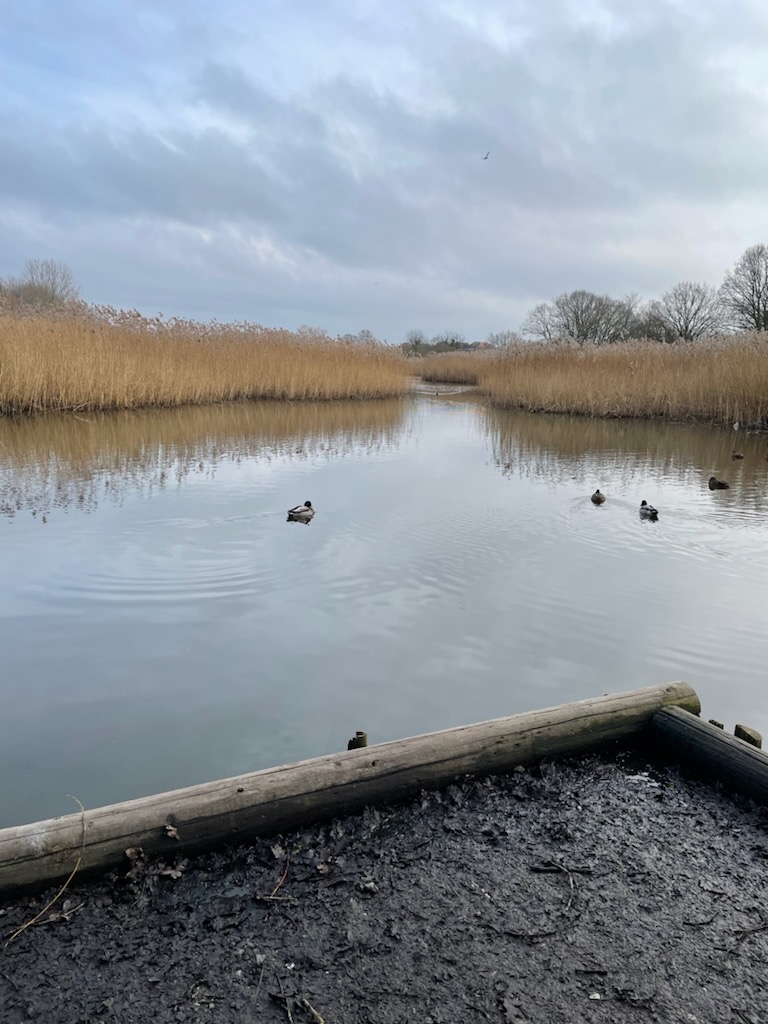
The ponds are serene and will reward for your efforts. The café is a great place to reward yourself after your exertions.

photograph Graham Carr Taken in late January 2024

Havering’s Places Overview and Scrutiny committee, 14th September 2023

Two very contrasting items dominated this meeting. The first was a presentation by an enthusiastic officer who had a good story to tell. Ray Morgon has emphasised good communications with the public and so will be delighted to know that the call centre is putting in a stellar performance with a mere 30 second wait for response.

The perennial problem for councils is the management of voids. Here was a very good report where the housing stock has not been allowed to rot in extended periods of neglect. Mandy Anderson (32 minutes)1 said that she’d noticed the improvement in housing maintenance in her casework.

The Green Flag Award recognises parks of a high standard. There is a great deal of civic pride involved in having 16 of Havering’s parks acknowledged in this way. The officer said 16 was the limit because of resource constraints. A spokesman for Friends of Raphaels and Lodge Park gave a presentation (51-4 mins). What was said was probably unwelcome. He felt Raphaels Park was unworthy of the honour and they’d nearly written to the Green Flag organisers to say so. For example, the grass had only been cut twice this year in June and September.2

Every councillor who contributed to this meeting spoke well.

Notes

1 Webcast Agenda for Places Overview & Scrutiny Sub Committee on Thursday, 14th September, 2023, 7.00 pm | The London Borough Of Havering All times relate to this webcast

2 David Taylor should find out what the contract for grass-cutting Raphaels park demands and see if this is a management problem or a designed failure.

Absences

Sue Ospreay, Kath Tumilty and Brian Vincent

Contenders for the coveted Damian White ‘Slacker of the Year’ Cup are four Councillors at 50% Philippa Crowder, Sarah Edwards, Robbie Misir and Christine Vickery. Current leaders for the cup are Councillors Robert Benham and Damian White at 43% attendance over six months.

Source Councillors attendance summary, 6 April 2023 – 29 September 2023 | The London Borough Of Havering

Havering’s Places Overview and Scrutiny Committee, 18th July 2023

David Taylor’s debut as chair proved he’s affable and courteous. The principal items on the agenda concerned trees and Havering’s fleet of vehicles. Both items had officers presenting reports with skill and panache. It was refreshing to hear experts nimbly answering questions.

Trees are very complex. A ‘canopy’ cover in Havering was a surprise. What wasn’t a surprise was a discussion of fruit trees. Brian Eagling (39 mins)1 and Gerry O’Sullivan (46 mins) spoke passionately about the damage, danger and mess they cause. They are an unintended consequence of the 1987 Great Storm, when there was no choice of replacement trees. The lack of maintenance was emphasised by Brian Vincent (34mins). Nonetheless the political consequences of stripping trees from streets was remembered by Osman Dervish (35 mins). Trees have passionate supporters.

The principal officers for Havering’s fleet of vehicles were a masterful double-act. The ULEZ programme has many ramifications. ULEZ fines were a burning topic and no-one believed the implementation August 29th date will be postponed.2 It seems Havering will pay about £88,000 in fines. This has incentivised the procurement of compliant vehicles. Air pollution was emphasied as a driving force in addition to efficiency though Climate Change wasn’t mentioned.

……………………………………………………………………………………………………………………………………….

Havering Daily: a comment

The e-newspaper did a survey of councillors about ULEZ.3 Not a single councillor mentioned Public Health, which was depressing. Even the Labour Party is trapped by a desire to have it both ways.

The Havering Daily should be congratulated for their efforts. And councillors who replied are sensitive to the democratic necessity of transparent dialogue – so they too should be congratulated. A surprising non-responder was Keith Prince – a ULEZ ultra.

Notes

1 Annotator Player (sonicfoundry.com) All times refer to this webcast

2 And they were quite correct as the High Court ratified ULEZ on the 28th July

3 Havering Councillors Reveal Their Views on the ULEZ Expansion and Pay Per Mile Scheme – The Havering Daily

The Power of Positive Politics

Visitors to the Ingrebourne Hill Country Park1 don’t realise that it was once an environmental disaster zone. There were major fly-tipping problems, rat infestation, motor-cycle nuisance and horses were tethered and left over the winter months, many of whom starved to death. In the long hot summer of 1976 major fires happened frequently because of the rotting waste producing methane gas. On at least two occasions the flames rose above the height of the houses.

Airfield ward councillors Ray Emmett (1982-2002) and Chris Purnell (1990-2002) led a campaign for a positive environmental solution, with the Labour Administration. There was a wonderful proposition, which resulted in the country park. Nothing less likely could have been imagined. Derelict land ravaged by decades of abuse was given an enormous facelift to the benefit of the entire community.

But there was a cost. The land was used as a dumping site for inert waste from all over London with hundreds of lorry movements each month. Simultaneously there was gravel winning which also meant a great deal of industrial activity. Ingrebourne Hill was engineered using that inert waste and then capped and sculpted into what it is now. The lake which is adjacent was the result of the gravel winning. Years of disruption for the Park’s neighbours have been richly rewarded.

The Ingrebourne Hill Country Park has mountain bike tracks, a short and challenging climb to the top and also, less energetically, gentle walks through to Albyns Farm. A further cost was the political careers of the Labour councillors who promoted that vision, which took just too long for the voters to see through to fruition.

Note

1 Ingrebourne Valley | The London Borough Of Havering

Langtons Gardens, Hornchurch

Langtons Gardens doesn’t have Havering Park’s magnificent redwood trees, or the broad acres of Hornchurch Country Park. Nor does it have a deer park with vistas across Havering that are so good they could be prescribed by your GP. Right in the centre of Hornchurch the gardens are the beating heart of the urban area.


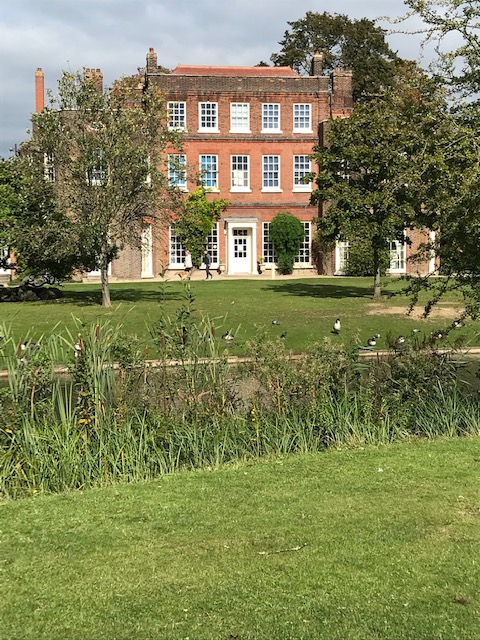
The Georgian house in Langtons Gardens. It’s now a wedding venue

Covid-19 has taught us about the critical importance of parks. Havering is blessed. Langtons Gardens are part of Havering’s historical legacy, which is very easy to take for granted.1 The magnificent gardens are maintained at a very high level, which is essential because they are under constant pressure by thousands of visitors. The garden’s constant improvement has seen a cafe opened and public toilets.

The lake in Langtons Gardens with the Georgian house in the background

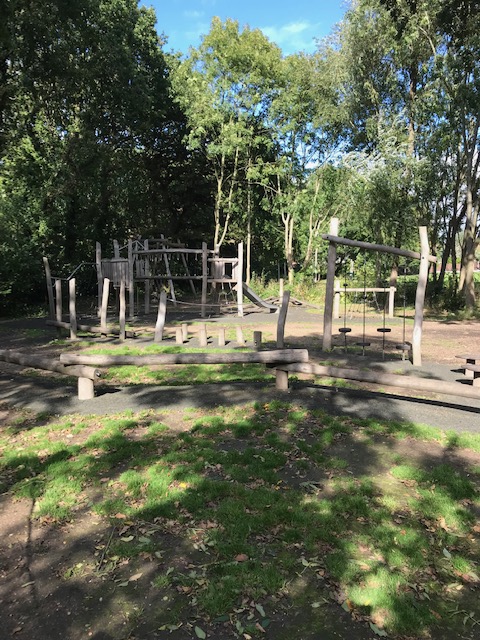
Langtons has a wonderful Georgian house and Orangery. These are picture perfect for wedding photos. The gardens include lawns, flowerbeds and a large lake. The pathways are smooth and readily accessible by everyone. There are numerous benches. After Fielders Field was opened there are more extensive walks. In the summer Fielders Field is used for cricket. Young children use the woodland adventure playground.

The woodland play area for children

Langtons Gardens are a delight and a credit to Havering Council.

Note

1 Langtons Gardens, Havering | GoParksLondon

Dagnam Park Invaders

Dagnam Park has hundreds of deer who are destroying the natural habitat.1 The deer are so numerous that they are a visible threat to the environment amongst other challenges. The ecology of Dagnam Park is in constant flux. There are three ‘invaders’ which are now part of the beauty of the park. Purists hate invaders and sometimes they really are hateful.

Harlequin Ladybird

Originally from Asia, the harlequin ladybird first arrived in the UK in 2004, and has rapidly become one of the most common ladybirds in the country, particularly in towns and gardens. It is one of our larger species and is a voracious predator – it is able to out-compete our native species for aphid-prey and will also eat other ladybirds’ eggs and larvae. It can have multiple broods throughout the spring, summer and autumn, which also gives it a competitive edge.2

Spanish Bluebell

just because it’s blue, bell-shaped and blooming in a wood in early spring it doesn’t mean it’s our native bluebell……a common favourite in gardens across the land – have been escaping into the wild for over 100 years. In fact, one in six broadleaved woodlands surveyed by Plantlife across the UK were found to contain a Spanish Bluebell or a hybrid between the two.3

Yellow Necked Terrapin

Habitat: Prefers still or slow-flowing water. Commonly found in urban parks…They are opportunistic omnivores and predate on invertebrates, fish and amphibians. They often use the banks of water bodies to bask, which can disturb the nests of waterfowl such as Moorhens and thus interfere with breeding.4

Conclusion

Dagnam Park, like parks across the whole world, is constantly evolving. Foreign invaders are easily identified, though they might not be easily dealt with. Other changes are driven by invisible factors. They include the climate emergency, pollution, mankind – housing, leisure, agriculture – and seasonal variations all alter the habitat. Foreign invaders are however especially important as the people of Florida have found out with their python problem.5

Notes

1 See Havering’s Deer Should be Culled – Politics in Havering

2 Harlequin ladybird | The Wildlife Trusts

3 Plantlife :: What’s the Difference Between Spanish and English Bluebells?

4 This quote is from Northern Ireland but it still holds good for Dagnam Park NIEA-ID-Guide-Trachemys-scripta-spp-Terrapins.pdf (invasivespeciesireland.com)

5 For the problems that Florida, USA has see The Burmese Pythons of Florida | Odeboyz’s Blog (oedeboyz.com)

Havering’s Rainham Riverside Walk

The medieval marshes of Rainham, Wennington and Aveley are one of the very few ancient landscapes remaining in London.”*

Rainham Riverside is an idiosyncratic gem. If you’re hoping for chocolate box beauty you’ll be disappointed. Approaching the car park you pass through an industrial area. Once beyond that there’s a narrow road with lush vegetation on either side. The last half mile or so prepares you for the small car park and the Thames in front of you. You’ve entered a different world.

Once on the riverside footpath, which is a good, sound surface, you can choose to go east or west. We took the eastwards route towards the RSPB site. Immediately you notice the sweep of the river. It isn’t glorious, it’s a working river. There are hulks from WW2 left in the mud. Their glory days supporting the Allied invasion on D-Day long gone. Numerous hand painted signs and information boards are scattered on fencing adjacent to the path.

One reason we didn’t get to the RSPB was that it was shut. The other reason was it was too far. Younger people could easily walk it. We needed more benches. Not very ambitious is it? A walk based on the distance between benches, but there you are. We did about a mile each way and found it to be most satisfactory.

It’s very popular with cyclists, many of whom have bells, unlike the ones who populate Hornchurch pavements. Small groups of walkers and families enjoyed the day as well. Recommended especially for the wonderful fresh air.

Note

* https://www.walkingclub.org.uk/walk/rainham-to-purfleet-via-rspb-rainham-marshes/ This is the website of the Saturday Walkers Club who do this walk four times a year

Source

For a blog on a walk from the RSPB, Rainham to Grays see https://exploring-urban-wastelands.co.uk/rainham-to-grays/

Havering Park: an Avenue of Redwood Trees

Havering Park still has the second largest plantation of Wellingtonia in England, totalling 100 trees

*

Havering Park is quite small and undistinguished. It doesn’t have a cafe or a deer park and it definitely doesn’t have stunning views across London. What it does have is a unique avenue of trees: Wellingtonia Avenue.

The Giant Redwood lines Wellingtonia Avenue but because of rapid local changes they go from nowhere to nowhere. They were planted about 140 years ago by the McIntosh family who owned the local mansion. Nowadays they’d be regarded as a foreign invader species but the attraction in the 19th century was that,

Redwoods grow faster than almost any other tree in the world, obtaining 3 to 10 feet of growth per year. Most of this growth occurs in the first century of a redwood’s life.** (my emphasis)

The great 18th century gardens took decades to put together before reaching maturity. The McIntosh family didn’t want to wait. They selected the Giant Redwood. The Giant Redwood lives for 3000 years becoming a monster, which means, barring climate change, they could live until about 5020! Havering Park is blessed with a landscape dominated by wonderful trees.

A short walk on a decent surface means that Havering Park provides a unique experience and is worth a visit.

Notes

* https://www.havering.gov.uk/info/20037/parks/723/havering_country_park

** https://www.gardenguides.com/12378880-how-fast-do-redwoods-grow.html

Sources

For a wonderful set of photographs see http://www.redwoodworld.co.uk/picturepages/havering.htm

For a detailed list of Havering’s principal parks see https://www.havering.gov.uk/info/20037/parks

For an overview of the giant redwood see https://en.wikipedia.org/wiki/Sequoiadendron_giganteum

For an 18th century Capability Brown garden see https://www.nationaltrust.org.uk/stowe/profiles/capability-found-at-stowe

The author and his grandson